Last December, Zach Sobiech, 18, posted a video on YouTube of a song he wrote called “Clouds.” Each day, thousands of kids all over the world post videos, but this one somehow caught the attention of more than four million people, once his story was revealed. Zach was diagnosed with bone cancer that spread throughout his body.
Zach’s story would be predictably tragic, were it not for his indomitable spirit and his true recognition that life is indeed a gift. Told he only had a few months to live, Zach decided to do just that – live. What follows is a short documentary about his last days of life, complete with a family that embraced every second, a girlfriend who risked her own emotional upheaval and friends and musicians who rallied to make every moment count. On Sunday, May 20, Zach died. His story is not so much about death as it is an affirmation of life. In the end, it's a joyful story. Watch. Please watch.
Thursday, May 23, 2013
Saturday, April 20, 2013
THE UNITED STATES OF BOSTON

Those of us in my generation trace one of our earliest memories to the assassination of President John F. Kennedy. From that moment, we progressed on through a number of other mid-to-late-20th century bloody assassinations, and right into the ongoing carnage of the Vietnam war. In between it all was the civil rights struggle that saw eruptions of street rioting coast to coast. We were raised on violence and mayhem. As children we saw our President shot through the brain. As teens we watched blood and guts in Vietnamese rice paddies every night on Walter Cronkite’s evening newscast. As young adults we were already inundated
 with unnatural acts of horror. By the time we were full adults, the Murrah Federal Building (left) was blown up in Oklahoma City. This time the carnage was the work of a disgruntled American angry at the government for another violent confrontation in Waco, TX two years earlier. And then the road winds around right into 9/11.
And now…Boston.
The day JFK was murdered, the U.S was about as low-tech as a developed nation could be. When the riots happened late at night in Washington, D.C. and Harlem the night Martin Luther King was murdered, many of us had no idea it was happening until the next day. Vietnam happened on our TV screens, but generally not in real time. Even so many years later when Oklahoma City happened, and later when the planes hit the buildings in NYC, although we watched it happen live on TV, there was not much social media happening and cameras in phones were not widely available yet.
 But Boston? The world is so high tech now that not only did law enforcement rely heavily on private citizens’ phone photos, but the second suspect was caught after a helicopter used infrared imaging technology (right) to determine that he was hiding under a sealed canvas in a boat. Those in the know explained it to us laypeople as technology that senses heat
to indicate there is an animal or human being in the targeted region. X-Ray vision, 21st century style. Technology did in the Tsarnaev brothers. As one network reporter put it, the phrase “lost in a crowd” no longer exists in 21st century America. If not technology, what other explanation is there that the Tsarnaev boys were identified and targeted by law enforcement within 24 – 48 hours of the marathon bombings?
But there are other differences between Boston and the history-making violent events through which we have lived. Chief among them may be the fact that Chechnya, a country of just over 1.2 million citizens could be a threat to the mighty USA. It speaks to the undeniable shift in world security that these two boys were able to pull this off. Another meaningful difference between Boston and past violent incidents is the complex fact that although they caught us by surprise with the bombings, we are no longer fully shocked that it could happen. We know now that terrorist attacks can happen anywhere, anytime. Three days after the Boston bombings a bomb threat at the New Orleans Marriott hotel forced its officials to evacuate the entire 41 floors and 1300+ guest rooms. Right here in New Orleans – we’re not a major U.S. center of commerce; we’re not a national government seat; we’re not even a tremendously populated city, compared to our more cosmopolitan sister cities. Yet even we have bomb threats.

It is still the freest country in the world, but freedom has been somewhat redefined. It now means we are on camera most of the time that we are not at home. It means there is even technology being used that can determine if someone is indeed in their home at any given time. The new normal holds that we Americans are not internationally adored. In many places just the opposite is the case. And the new normal holds that those who would commit violent mass attacks walk right among us. The surviving Tsarnaev brother is described by some of his American high school and college classmates as a great guy, fun, and just “one of us.” So far, to a person they describe someone who they would never have known had it in for Americans.

Tuesday, April 9, 2013
MY 7 OBSESSIONS WITH "MAD MEN"

I’m one of those people who can’t get enough “Mad Men,” and after waiting almost a year for the show to come back with new episodes, Sunday night was a major event. Maybe it’s the focus on the 1960’s, the decade in which I grew up, and the uncanny social accuracy the creators achieve. The sets, the costumes, the drinks, the cigarettes, the music, the sexy overtones (more on that later!), but especially the mindset. How could our cultural status have appeared so sophisticated, but really have been so, so innocent? This new set of episodes appears to be set right around 1968, and if ever there was a year that altered the American psyche and the future of the society, it was that year. As one who is obsessed with the show, here are 10 objects of my obsession from the first new episode:
1. THE CHANGING ROLE OF WOMEN: Main character Peggy Olsen represents the antithesis of what women were supposed to be back then. Career-laser-focused, Peggy is in a new, more responsible advertising position, and true to form,her behavior is now mirroring the behavior of her male counterparts at her former ad agency. That’s what women thought they had to do back then, and well into the 1980s, actually. They believed they had to become men to make the unlikely climb up the corporate ladder. “Can you get me some coffee?” she barks from her office while working all night on New Year’s Eve and forcing her male subordinates to do the same.
 Career-laser-focused, Peggy is in a new, more responsible advertising position, and true to form,her behavior is now mirroring the behavior of her male counterparts at her former ad agency. That’s what women thought they had to do back then, and well into the 1980s, actually. They believed they had to become men to make the unlikely climb up the corporate ladder. “Can you get me some coffee?” she barks from her office while working all night on New Year’s Eve and forcing her male subordinates to do the same.
2. COUNTER CULTURE: A few seasons ago there was an NBC TV drama called “American Dreams,” also set in the 1960s, in which the year 1968 was just touched on in the third season. Those who didn’t live through the “hippie era” were about to see how it changed some young people from innocents into members of a new societal counter culture. It got cancelled. “Mad Men” is about to pick up right where “American Dreams” left off, with a view of how some young people rejected convention and formed their own youth movement.
6. MEN’S BURIED EMOTIONS: If you think men are denying their feelings orconcealing their emotions today, you really had to see 1960s men. Don Draper is great at withholding everything he feels and internalizing it all into some deep, dark tunnel of grey matter. And Roger Sterling, who barely blinked upon hearing of his mother’s death, cries wild tears upon hearing that his regular shoe shine man died – but only in his office, alone. 1960s men are accurately depicted in “Mad Men” as in emotional denial about everything and unable to converse with anyone in any circumstance about feelings.
Even with all of my above-mentioned obsessions, the real genius in the series rests in the writers’ words. For five seasons the writers have slowly and meticulously revealed that Don Draper is a human train wreck. Now it becomes more obvious: On vacation in Hawaii, he is on the beach reading “The Inferno,” of all things. Creator Matt Weiner walks a fine line of over-symbolizing… “The Inferno” was a bit much, but it fits with everything we already know about Don’s dark psyche.
The writers are also smartly and slowly working in references to Vietnam. So far the references are pretty benign, but 1968 was the year of the Tet offensive, a series of attacks by the North Vietnamese that escalated the war in an unprecedented way. Some say the Tet offensive did in Lyndon Johnson’s presidency, caused Secretary of Defense Robert McNamara’s military career to crash and burn and caused everyday Americans to truly realize we were in a war. How will “Mad Men” handle this new infusion of faraway blood and guts to influence its scripts? How will the writers balance their material between Wall Street, Hanoi and Haight Ashbury. That 1960s innocence I mentioned earlier? It’s due to fade to black in this season’s “Mad Men.” Why oh why aren’t you watching???!
Sunday, March 24, 2013
Thursday, March 21, 2013
BAD BOYS IN ANYTOWN, USA
 |
| Edgar Gonzalez, 18 (left) and John Toribio, 18 |
 | |
| Trent Mays, 16 (l) and Ma'Lik Richmond, 17 |
 There are two issues that jump off the page in both of these cases. First, via these two cases we are witnessing the extreme downside of social media. In both towns, other teens have taken to Twitter to express their anger at the victims of these assaults. The unidentified 13-year-old girl in Torrington has been called all the predictable names – snitch, bitch, slut, whore, hoe, etc. Very few Tweets have been reported that are directed at the alleged attackers. The same thing happened in Ohio. Such is the duplicitous nature of our collective morality. Some Tweets asked why a 13-year-old girl was hanging out with 18-year-old boys. One Tweet admonished the victim for “ruining two people’s lives.” Another Tweeted, “young girls acting like whores there’s no punishment, young men acting like boys that’s a sentence.” Have we not yet moved past or evolved up from the “boys will be boys” argument?
Blaming women for being raped is nothing new, but here in the early 21st century one might believe we’d be a bit more enlightened than to perpetuate such ignorant admonishments. By now, you have no doubt heard the intense criticism leveled at CNN’s anchor Candy Crowley and correspondent Poppy Harlow for their post-Steubenville sentencing coverage. More than 200,000 people have signed a petition criticizing the two reporters for allegedly sympathizing on-air with the convicted rapists rather than the young victim. Both have publicly denied that their reporting was skewed toward the boys, but the proof is in the video. Watch: A tip of the socially-conscious hat to those 200,000 plus people who signed the petition asking why the reporters never saw fit to even mention the plight of the young woman who was raped. The petition demands an on-air apology from CNN. Oh, and it gets worse: Shame, shame on CNN for airing a courtroom clip in which the name of the 16-year-old victim was said out loud. Come on CNN. What the hell is going on?
Beyond the clear sexism in the public’s and the media’s response to these types of cases is the issue of obvious negligence on the part of adults. Is no one teaching teens the necessity of social consciousness, respect for fellow human beings and the importance of behavioral boundaries? We all know that left to their own devices, some young teenage girls will recklessly flirt with older boys, and those older boys will most often be ruled by their own raging testosterone levels. Put those two combustible agents together and poof – teen rape in Anytown, USA. Don’t misinterpret this: I place the blame for these sexual assaults directly on the boys who perpetrated the crimes. But I have to wonder why we adults are not working a bit harder to properly socialize kids.
As mentioned above, there is nothing new about any of this. When I was in high school in what seems about 100 years ago, a young male teacher told one of my horny male classmates this, when pointing out a particularly big-breasted teenage girl: “See? That’s the kind of shit you go after and you don’t stop until you get it.” I never forgot that moment. How many other teachers and coaches are counseling their randy young male students or athletes to pursue that “kind of shit” even today?
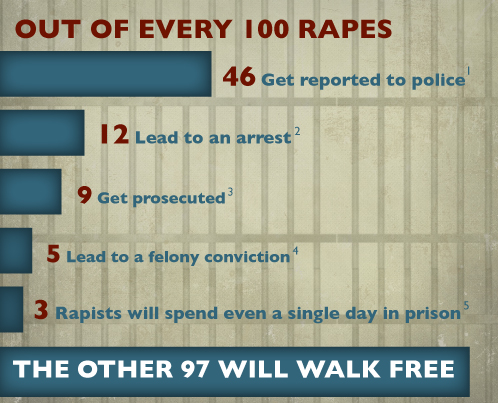 I daresay it’s pretty widespread. As usual, the numbers tell the story: 10.5 percent of all American high school-age girls have been forced into sexual intercourse, according to a report by the U.S. Centers for Disease Control and Prevention. That figure is conservative, based on the CDC’s further finding that up to 50 percent of sexual assaults against women are never reported. Additionally, the U.S. Department of Justice reports that in 2007 that one in two rape victims was under age 18; one in six was under age twelve.
Often the perpetrators simply continue their daily lives, uninterrupted. Why weren’t any of these boys suspended from their football teams when the formal accusations were made? In Steubenville, Gonzalez had already been charged in a March 2012 alleged felony robbery after he and three others allegedly jumped three 14-year-olds in search of money, yet he was allowed to play in the 2012 football season anyway.
These incidents are hard reminders that we are still a paternalistic society; that we still give our young athletes a pass when it comes to their blatantly bad – and sometimes felonious – behavior; that victims of sexual crimes are often further victimized by onlookers and even Tweeters; and most importantly, that the grownups have fallen way down on the job of teaching kids right from wrong. When two grown, educated, successful women broadcast their extreme compassion for two rapists on national television, something is way, way off. When high school football coaches attempt to cover up the criminal actions of their players, the entire community suffers. It all serves only to perpetuate the myth that “it’s just sex.” It’s not just sex. It’s about power and violence and every time we protect or sympathize with a boy who rapes a girl we put another ethical dent in an already damaged culture.
Saturday, March 16, 2013
CPAC SOUNDS OFF ON GAY MARRIAGE
Senator Rob Portman (R-OH) ignited a firestorm this week when he anounced his sharp u-turn on gay marriage. Long a vocal and hard-voting conservative on all issues gay (he actually co-sponsored the Defense of Marriage Act [DOMA]), Portman’s stunning reversal happened after his own 26-year-old son came out as gay. (See “A Senator Sees the Light” on the left side of this page) It so happens Portman’s revelation of his change of political heart happened at the exact moment the annual Conservative Political Action Conference (CPAC) was in session.
The ultra-liberal blog “Think Progress” dispatched a team of reporters to cover the conference. Today, one of them talked to several CPAC attendees to get their reaction to Portman’s comments. Their reaction, while predictable, is still jarring in its intolerance. In the midst of rapid societal progress, these comments illustrate how divided the country still is on social issues Watch:
Interestingly, the younger attendees at CPAC have a different take on gay marriage. While not necessarily in favor of changing the law, many of them express more inclusive suggestions for social change. Watch:
Thursday, March 7, 2013
ANIMAL CRUELTY LAWS: Weak and Unenforced
 On Sept. 12, 2011, Milan Rysa, an illegal immigrant tossed
his three-year-old Shar-Pei dog out of his third-story apartment window in
Queens, NY. The dog died upon impact,
barely missing two women pedestrians before it hit the street. I have been
closely following the progress of Rysa’s case since that night. Rysa, a bodybuilder who worked at a local
gym, was arrested the night of the incident, although he initially said he was
asleep when the dog died and had nothing to do with it. He was taken to a
hospital for psychiatric evaluation and then put in prison. He eventually
pleaded guilty to reckless endangerment March 15, 2012 and was given a sentence
of 364 days in prison. He served just three-quarters of his sentence.
On Sept. 12, 2011, Milan Rysa, an illegal immigrant tossed
his three-year-old Shar-Pei dog out of his third-story apartment window in
Queens, NY. The dog died upon impact,
barely missing two women pedestrians before it hit the street. I have been
closely following the progress of Rysa’s case since that night. Rysa, a bodybuilder who worked at a local
gym, was arrested the night of the incident, although he initially said he was
asleep when the dog died and had nothing to do with it. He was taken to a
hospital for psychiatric evaluation and then put in prison. He eventually
pleaded guilty to reckless endangerment March 15, 2012 and was given a sentence
of 364 days in prison. He served just three-quarters of his sentence. |
| Milan Rysa and "Brooklyn" |
Rysa then became subject to Immigration and Customs
Enforcement action. He is awaiting a
court date to find out if he will be deported to his native Czech Republic. The message Rysa’s experience sends to the world is that in
America you can murder an animal that you own, serve a brief prison sentence
and then be released. If the American animal abuse laws are inadequate, it is
largely because they are archaic and not prioritized by individual states.
 |
| "PRIMO" |
 Consider what happened in my own home town, New
Orleans. Primo was a six-year-old
Belgian Malinois who served in the K-9 division of the New Orleans Police
Department. In May, 2009, his handler, Officer Jason Lewis, left Primo
unattended in a police vehicle in extreme heat.
The dog evidently struggled to escape the vehicle, but weakened and died
of heat stroke. Prior to dying, the dog
was taken to a veterinarian, where he suffered three seizures before
succumbing. Photos of the vehicle (above, left) in which Primo died show a torn up interior,
likely the result of Primo’s desperate attempt to escape. It should be noted
that the necropsy report by the Louisiana Animal Disease Diagnostic Laboratory
shows Primo’s temperature upon arrival at the veterinary clinic was 109.8
degrees.
Consider what happened in my own home town, New
Orleans. Primo was a six-year-old
Belgian Malinois who served in the K-9 division of the New Orleans Police
Department. In May, 2009, his handler, Officer Jason Lewis, left Primo
unattended in a police vehicle in extreme heat.
The dog evidently struggled to escape the vehicle, but weakened and died
of heat stroke. Prior to dying, the dog
was taken to a veterinarian, where he suffered three seizures before
succumbing. Photos of the vehicle (above, left) in which Primo died show a torn up interior,
likely the result of Primo’s desperate attempt to escape. It should be noted
that the necropsy report by the Louisiana Animal Disease Diagnostic Laboratory
shows Primo’s temperature upon arrival at the veterinary clinic was 109.8
degrees.
Lewis was appropriately fired. But he appealed his termination and in May,
2012 the 4th Circuit Court of Appeal in New Orleans said it found no evidence
that officer Jason Lewis was negligent in his care for Primo, his 6-year-old
Belgian Malinois, and Lewis was reinstated to his NOPD position.
Also in May, 2009, veteran K-9 NOPD officer Sgt. Randy Lewis
falsified a permission slip to use another police dog named Phantom in a
security search of a shuttered New Orleans hospital. The dog, who was not technically supposed to
be on this detail, broke free from Lewis while in the hospital and fell 17 floors
down an elevator shaft. Lewis, court
records indicate, then tried to cover
up the details of the dog’s death. He
was charged with malfeasance in office, but remarkably, he was acquitted.
These disgusting examples of animal abuse and neglect may
seem as though they are isolated incidents, but the hard truth is that animal
mistreatment is epidemic in our culture. The Humane Society of America reports
that most victims (65%) are dogs. It is
further reported that 71 per cent of human domestic violence victims report
that their abuser also targets their animals. Forty-seven states currently have
felony provisions for animal abuse. Those that do not have such laws are Idaho,
North Dakota and South Dakota.
 The problem is that these laws are weakly enforced, and
individual judges can dismiss cases, which is exactly what happened with Sgt.
Randy Lewis. The felony animal abuse laws are unevenly prosecuted
nationwide. Perhaps this rather
nonchalant view of animal abuse will explain why in 2010, there were only 16
reported cases of animal abuse in Louisiana.
In New York, where Milan Rysa murdered his dog, there were 100 cases,
still a fraction of the number of animals that were most likely abused in the
state that year.
The problem is that these laws are weakly enforced, and
individual judges can dismiss cases, which is exactly what happened with Sgt.
Randy Lewis. The felony animal abuse laws are unevenly prosecuted
nationwide. Perhaps this rather
nonchalant view of animal abuse will explain why in 2010, there were only 16
reported cases of animal abuse in Louisiana.
In New York, where Milan Rysa murdered his dog, there were 100 cases,
still a fraction of the number of animals that were most likely abused in the
state that year.
Some perspective: In
Louisiana, the penalty for purse-snatching is two to 20 years in prison. But,
as stated above, the penalty for allowing a dog to die under the cruelest
conditions in a hot car with windows closed was…well, there was no penalty. In
New York, the penalty for breaking windows in someone’s house is imprisonment
for up to 10 years or a fine of not more than $15,000.00 or 3 times the amount
of the destruction or injury, whichever is greater, or both imprisonment and a
fine.  But, in the case of Milan Rysa,
the penalty for murdering a dog is less than a year in prison, and no fine.
There are many states, most notably Kentucky and New Mexico, in which owners do
not even have to forfeit their animals if they abuse them and get caught. They get to keep them and most likely abuse
them further. There is no consistency from state to state regarding animal
abuse laws and penalties and many states almost ignore the problem. In Iowa,
for example, police officers are not even required to report animal abuse that
they witness, or to intervene to try to stop the abuse. You can beat your dog
up in front of an Iowa cop and he or she has no obligation to stop you.
But, in the case of Milan Rysa,
the penalty for murdering a dog is less than a year in prison, and no fine.
There are many states, most notably Kentucky and New Mexico, in which owners do
not even have to forfeit their animals if they abuse them and get caught. They get to keep them and most likely abuse
them further. There is no consistency from state to state regarding animal
abuse laws and penalties and many states almost ignore the problem. In Iowa,
for example, police officers are not even required to report animal abuse that
they witness, or to intervene to try to stop the abuse. You can beat your dog
up in front of an Iowa cop and he or she has no obligation to stop you.
But, in the case of Milan Rysa,
the penalty for murdering a dog is less than a year in prison, and no fine.
There are many states, most notably Kentucky and New Mexico, in which owners do
not even have to forfeit their animals if they abuse them and get caught. They get to keep them and most likely abuse
them further. There is no consistency from state to state regarding animal
abuse laws and penalties and many states almost ignore the problem. In Iowa,
for example, police officers are not even required to report animal abuse that
they witness, or to intervene to try to stop the abuse. You can beat your dog
up in front of an Iowa cop and he or she has no obligation to stop you.
In 2012, the Animal Legal Defense Fund issued a report, "U.S. Animal Protection Laws Rankings," in which it ranked every state in the U.S. as to its animal
abuse laws and enforcement. Even in
Illinois, which it ranked in the top five states for animal protection, it
revealed that if a citizen is convicted of animal abuse, he or she does not
have to give up their animal. Further, just like Iowa, if police officers
witness animal abuse, they do not have “an affirmative duty to enforce animal
protection laws.” Other states have animal protection laws that lack
definitions, so enforcement of the laws becomes arbitrary. Still other states lack basic laws to protect
animals from obvious mistreatment. In New Mexico, for example, remarkably there
are no provisions for sexual assault of an animal. We humans have to start taking action in our individual
states to strengthen these laws. Here is
what you can do:
1. Contact your state legislators and express your concern about animal protection. Many legislators do not take much of an interest in animal protection because it is not a hot button topic that gains them notoriety or votes. You have to push them to act. WE ALL HAVE TO BECOME ACTIVISTS AND LOBBYISTS. Animals are depending on us.
2. If you suspect or witness animal cruelty or neglect, report the abuse to the Humane Society, document what you have seen or suspected and be willing to testify against the perpetrator.
3. Work within the system to strengthen existing animal protection laws in your state. Start locally, move to the state level and then the national level, via groups that are already involved with animal protection.
4. Know the laws in your state so that you can know what is missing. Click here to learn the specifics of the laws in your state, as listed by the ASPCA. Also, know what laws are pending. You can find this out through an interactive map
6.
at Born Free USA, a national non-profit
organization that lobbies for the care and protection of animals.
5. Contact the media to get coverage for instances
of extreme cruelty and neglect. If you contact a local television station, ask
to speak directly with the news director and be brief, concise and
specific. Offer to be interviewed, if
necessary.
Most importantly, adopt animals that you can take care of
properly. Encourage people you trust to do the same. If you truly love animals, now is the time for us all to
mobilize against animal cruelty. Never
give up and never stop caring.
Thursday, February 28, 2013
YAHOO!'s 12,000 NEWLY-DISGRUNTLED WORKERS
UPDATE - March 7, 2013 One week after YAHOO! announced that it would no longer allow telecommuting, Best Buy, the struggling home appliance and electronics giant, announced it will now do much the same thing. Best Buy will end a program started in 2005 that allowed many of its corporate employees to work flexible hours, including some from their homes. Click here to read the details. The original post about YAHOO! follows below:
 From all outward appearances, Marissa Mayer is the epitome of a 21st century young business-woman, balancing her formidable work life and her new role as mother. Mayer, 37, is the Stanford-educated over-achiever who just last year was installed as CEO of YAHOO!, after a 13-year career with Google. Her trajectory, while enviable (she will earn a reported $59 million this year), hit a nasty public image snag last week, when she announced that the approximately 12,000 YAHOO! employees who telecommute will now be required to work regular business hours in the office. For a company that has touted itself as the “grandfather” of the tech industry, Mayer’s announcement seemed to some about as forward-thinking as a manual typewriter.
Among those who will be adversely affected by Mayer’s decision are physically challenged workers, some who care for disabled or elderly relatives, those who live great distances from the workplace, and especially parents, who have found the best of both worlds, being able to raise their children at home and have fruitful careers. It is the latter group who are the focus of much of the media swell that resulted from Mayer’s announcement.
The media has demonstrated sharp division in its reaction to Mayer’s decision. One wonders how many more articles with titles like “5 Reasons Melissa Mayer is Right” or “3 Reasons Melissa Mayer is Short-Sighted” will flood the editorial inventory before the dust settles. But one thing is for sure: Mayer’s decision is a one-way ticket back to 1973ish, when everybody got up every day, put on their best corporate duds, inhaled coffee, delivered the kids to strangers and took off for big glass boxes to invest their eight hours into whatever it was they did to make money to buy coffee and have kids. It was an inefficient way to run a world then and it certainly makes no sense in 2013, when gas lingers near $4 a gallon, there are more single parents than ever before in American history and the big glass box office buildings cost more than ever to maintain. What in the world was she thinking?
 Well, according to the digital doyenne, togetherness is the key to success: “To become the absolute best place to work, communication and collaboration will be important, so we need to be working side-by-side,” Mayer wrote in a memo to the staff. "That is why it is critical that we are all present in our offices."
Oh Marissa, Marissa, Marissa. Take it from an almost-60-year-old American worker who has worked in one office or another for decades, right next door and down the hall from hundreds (thousands?) of others who have also worked in their own corporate boxes: Togetherness is highly over-rated in the workplace. What galls me more than anything is that you, Marissa, know that to be true.
 First, many of your workers get to their offices in the morning and never leave them, except possibly to go to lunch or the restroom, until they leave at 5 p.m. How is that collaborative?
Second, about those many married and single parents who work for you: Because your company graciously enabled many of them to work from home, they do not have to pay the astronomical monthly fees for childcare services. Unless you are planning to reasonably increase their salaries, I’m wondering how you expect them to adjust to your new rules.
First, many of your workers get to their offices in the morning and never leave them, except possibly to go to lunch or the restroom, until they leave at 5 p.m. How is that collaborative?
Second, about those many married and single parents who work for you: Because your company graciously enabled many of them to work from home, they do not have to pay the astronomical monthly fees for childcare services. Unless you are planning to reasonably increase their salaries, I’m wondering how you expect them to adjust to your new rules.
According to a September, 2012 report from Child Care Aware of America, a year of full-time childcare in a center for a 4-year-old costs an average of $3,900 in Mississippi, compared to $11,700 in Massachusetts, while care for an infant costs $4,600 in Mississippi, compared to nearly $15,000 in Massachusetts. Still not convinced? Get this: In California, where YAHOO!’s corporate offices are located, the average cost of full-time infant child care is more than $11,500, almost double average tuition and fees at a public college. Average full-time day care costs for a four-year-old in California is more than $8,200 — and it also exceeds the almost $6,000 tab for a year at a public college, according to the report by the National Association of Child Resource and Referral Agencies in Arlington, Va.
 So, Marissa, is it reasonable and humane for you to expect your workers to add $11,500 to their annual expenses for childcare, not to mention the cost of their commute to and from work, without adjusting their salaries?
If Mayer’s answer falls under the “Not my problem” category, that may have something to do with the fact that she brings her own four-month old child (left) to work with her, and has the distinct advantage of having a nursery in her office. Your average worker will not, of course, have that option. While I applaud Mayer’s ability to run a $4 billion company while simultaneously raising a newborn child, it does seem rather non-empathetic of her to expect her underlings to achieve work/life balance with their kids miles away in costly daycare centers. It is complex territory. Watch this report from ABC News:
So, Marissa, is it reasonable and humane for you to expect your workers to add $11,500 to their annual expenses for childcare, not to mention the cost of their commute to and from work, without adjusting their salaries?
If Mayer’s answer falls under the “Not my problem” category, that may have something to do with the fact that she brings her own four-month old child (left) to work with her, and has the distinct advantage of having a nursery in her office. Your average worker will not, of course, have that option. While I applaud Mayer’s ability to run a $4 billion company while simultaneously raising a newborn child, it does seem rather non-empathetic of her to expect her underlings to achieve work/life balance with their kids miles away in costly daycare centers. It is complex territory. Watch this report from ABC News:
The real issue here, however, is Mayer’s commitment to her belief that togetherness is the key to the company’s success. Not so, say researchers. In fact, a Forester Research report projects that 43 percent of Americans will work off-site at least one day a week by 2016. A recent Stanford University study of 249 call center workers at a Chinese travel agency found that those who were randomly selected to work from home four days a week for nine months -- after they volunteered to do so -- experienced a 13 percent increase in their work performance. There are other studies that show increases in productivity for those who work at home, and additional studies that indicate worker satisfaction increases with autonomy and independence from an office setting.
 To Marissa Mayer, I would say this: Those 12,000 bodies you want to add to the in-house corporate culture so they can have that free exchange of ideas in person? Many of them will spend their time talking and focusing on anything but their jobs. They will talk a lot about you, and how you have single-handedly set the workplace back a good 25 years. They will talk about each other, about the fabulous new restaurant they went to last night, about how their wireless service sucks, about how somebody’s dress at the Oscars was inappropriate, about when new episodes of “Mad Men” are supposed to debut, about how ridiculously expensive Super Bowl tickets are, about how worried they are about their spouses’ job security, about how hot so-and-so is down the hall…..Marissa, they will talk about almost anything except work. You already know that because you have worked in the corporate culture your whole adult life. So why be so idealistic to believe that returning to a 20th century business model will save a struggling company like YAHOO! in the 21st century?
Mayer is YAHOO!’s 5th CEO in six years. That is very telling about the current state of the company. She is clearly attempting to make an unprecedented move in a desperate attempt to turn the company around. Desperation doesn’t solve problems in corporateland, I have found. Strong leadership and smart supervision, a nurturing business environment and humane treatment of employees will go much further than squeezing another 12,000 people into a big glass box.

Among those who will be adversely affected by Mayer’s decision are physically challenged workers, some who care for disabled or elderly relatives, those who live great distances from the workplace, and especially parents, who have found the best of both worlds, being able to raise their children at home and have fruitful careers. It is the latter group who are the focus of much of the media swell that resulted from Mayer’s announcement.

The media has demonstrated sharp division in its reaction to Mayer’s decision. One wonders how many more articles with titles like “5 Reasons Melissa Mayer is Right” or “3 Reasons Melissa Mayer is Short-Sighted” will flood the editorial inventory before the dust settles. But one thing is for sure: Mayer’s decision is a one-way ticket back to 1973ish, when everybody got up every day, put on their best corporate duds, inhaled coffee, delivered the kids to strangers and took off for big glass boxes to invest their eight hours into whatever it was they did to make money to buy coffee and have kids. It was an inefficient way to run a world then and it certainly makes no sense in 2013, when gas lingers near $4 a gallon, there are more single parents than ever before in American history and the big glass box office buildings cost more than ever to maintain. What in the world was she thinking?
 Well, according to the digital doyenne, togetherness is the key to success: “To become the absolute best place to work, communication and collaboration will be important, so we need to be working side-by-side,” Mayer wrote in a memo to the staff. "That is why it is critical that we are all present in our offices."
Oh Marissa, Marissa, Marissa. Take it from an almost-60-year-old American worker who has worked in one office or another for decades, right next door and down the hall from hundreds (thousands?) of others who have also worked in their own corporate boxes: Togetherness is highly over-rated in the workplace. What galls me more than anything is that you, Marissa, know that to be true.
 First, many of your workers get to their offices in the morning and never leave them, except possibly to go to lunch or the restroom, until they leave at 5 p.m. How is that collaborative?
Second, about those many married and single parents who work for you: Because your company graciously enabled many of them to work from home, they do not have to pay the astronomical monthly fees for childcare services. Unless you are planning to reasonably increase their salaries, I’m wondering how you expect them to adjust to your new rules.
First, many of your workers get to their offices in the morning and never leave them, except possibly to go to lunch or the restroom, until they leave at 5 p.m. How is that collaborative?
Second, about those many married and single parents who work for you: Because your company graciously enabled many of them to work from home, they do not have to pay the astronomical monthly fees for childcare services. Unless you are planning to reasonably increase their salaries, I’m wondering how you expect them to adjust to your new rules.According to a September, 2012 report from Child Care Aware of America, a year of full-time childcare in a center for a 4-year-old costs an average of $3,900 in Mississippi, compared to $11,700 in Massachusetts, while care for an infant costs $4,600 in Mississippi, compared to nearly $15,000 in Massachusetts. Still not convinced? Get this: In California, where YAHOO!’s corporate offices are located, the average cost of full-time infant child care is more than $11,500, almost double average tuition and fees at a public college. Average full-time day care costs for a four-year-old in California is more than $8,200 — and it also exceeds the almost $6,000 tab for a year at a public college, according to the report by the National Association of Child Resource and Referral Agencies in Arlington, Va.
 So, Marissa, is it reasonable and humane for you to expect your workers to add $11,500 to their annual expenses for childcare, not to mention the cost of their commute to and from work, without adjusting their salaries?
If Mayer’s answer falls under the “Not my problem” category, that may have something to do with the fact that she brings her own four-month old child (left) to work with her, and has the distinct advantage of having a nursery in her office. Your average worker will not, of course, have that option. While I applaud Mayer’s ability to run a $4 billion company while simultaneously raising a newborn child, it does seem rather non-empathetic of her to expect her underlings to achieve work/life balance with their kids miles away in costly daycare centers. It is complex territory. Watch this report from ABC News:
So, Marissa, is it reasonable and humane for you to expect your workers to add $11,500 to their annual expenses for childcare, not to mention the cost of their commute to and from work, without adjusting their salaries?
If Mayer’s answer falls under the “Not my problem” category, that may have something to do with the fact that she brings her own four-month old child (left) to work with her, and has the distinct advantage of having a nursery in her office. Your average worker will not, of course, have that option. While I applaud Mayer’s ability to run a $4 billion company while simultaneously raising a newborn child, it does seem rather non-empathetic of her to expect her underlings to achieve work/life balance with their kids miles away in costly daycare centers. It is complex territory. Watch this report from ABC News:
The real issue here, however, is Mayer’s commitment to her belief that togetherness is the key to the company’s success. Not so, say researchers. In fact, a Forester Research report projects that 43 percent of Americans will work off-site at least one day a week by 2016. A recent Stanford University study of 249 call center workers at a Chinese travel agency found that those who were randomly selected to work from home four days a week for nine months -- after they volunteered to do so -- experienced a 13 percent increase in their work performance. There are other studies that show increases in productivity for those who work at home, and additional studies that indicate worker satisfaction increases with autonomy and independence from an office setting.
 To Marissa Mayer, I would say this: Those 12,000 bodies you want to add to the in-house corporate culture so they can have that free exchange of ideas in person? Many of them will spend their time talking and focusing on anything but their jobs. They will talk a lot about you, and how you have single-handedly set the workplace back a good 25 years. They will talk about each other, about the fabulous new restaurant they went to last night, about how their wireless service sucks, about how somebody’s dress at the Oscars was inappropriate, about when new episodes of “Mad Men” are supposed to debut, about how ridiculously expensive Super Bowl tickets are, about how worried they are about their spouses’ job security, about how hot so-and-so is down the hall…..Marissa, they will talk about almost anything except work. You already know that because you have worked in the corporate culture your whole adult life. So why be so idealistic to believe that returning to a 20th century business model will save a struggling company like YAHOO! in the 21st century?
Mayer is YAHOO!’s 5th CEO in six years. That is very telling about the current state of the company. She is clearly attempting to make an unprecedented move in a desperate attempt to turn the company around. Desperation doesn’t solve problems in corporateland, I have found. Strong leadership and smart supervision, a nurturing business environment and humane treatment of employees will go much further than squeezing another 12,000 people into a big glass box.
Wednesday, January 23, 2013
NEW TIMES
Social change is happening at record speed right now in this country. We all feel it. It is the risk takers and those who have uncommon bravery who really generate these big changes. Barack Obama and Leon Panetta revealed this week that women will now be allowed to assume combat positions in the military. America is seriously evolving. And then there’s this boy, Jacob Rudolph, an 18-year-old high school senior from New Jersey. Watch as he shows real grit in revealing himself to his entire high school. It is reported that Jacob’s father, Jonathan Rudolph said of his son’s act, “What he did took more guts than anything I have ever attempted in my life.” Watch:
Since the sound is somewhat distorted, here is exactly what Jacob said:
"Sure I've been in a few plays and musicals, but more importantly, I've been acting every single day of my life. You see, I've been acting as someone I'm not. Most of you see me every day. You see me acting the part of 'straight' Jacob, when I am in fact LGBT. Unlike millions of other LGBT teens who have had to act every day to avoid verbal harassment and physical violence, I'm not going to do it anymore. It's time to end the hate in our society and accept the people for who they are regardless of their sex, race, orientation, or whatever else may be holding back love and friendship. So take me, leave me or move me out of the way. Because I am what I am, and that's how I'm going to act from now on."
Friday, January 4, 2013
STEP ASIDE, MR. SCALIA...STEP WAY ASIDE

What if a Supreme Court Justice publicly expressed
discriminatory opinions against an entire population segment? And what if that
same Justice repeatedly voted in a way that would deny that population segment
the same rights as other Americans? And most importantly, what if the culture
was rapidly changing in favor of the above-mentioned population segment, but
the Justice continued to vote in favor of what he has referred to as “rather
modest attempt to preserve traditional sexual mores against the efforts of a
politically powerful minority."
The very bad news is that there is indeed such a Supreme
Court Justice. For those who have not really paid much attention to him, let me
introduce Supreme Court Justice Antonin Scalia (below, left). And that much talked-about
population segment? That would be gay Americans, a part of the U.S. citizenry
that Scalia has clearly chosen to disenfranchise at every turn. That is why I
am using my citizen voice to ask Scalia to recuse himself from the Court’s 2013
votes related to gay rights. I believe Scalia should step aside during these
votes based on his unfortunate, discriminatory and fully homophobic past votes
on issues related to gay Americans.

This year, the Supreme Court is slated to vote on two
critical issues related to gay rights -- California's Proposition 8, which bans
gay marriage, and a provision of the federal Defense of Marriage Act. In the first case, the Court will consider the
constitutionality, or lack thereof, of California’s Proposition 8, which
defines marriage as only between a man and a woman. The second critical decision will have to do
with the Defense of Marriage Act, which also holds that only men and women can
marry one another, and that all of the following are not legal for gay
couples: Insurance benefits for
government employees, Social Security survivors' benefits, immigration, and the
filing of joint tax returns.
For the record, DOMA was signed into law in 1996. These past
17 years have seen more rapid social change regarding gay Americans than in any
time in U.S. history. Even the President who signed the bill into law, Bill
Clinton, now disagrees with it. So do a number of federal courts that have
ruled the bill unconstitutional. DOMA does not really apply to contemporary
America. And although 1996 may not seem like such a long time ago, we all know
that much has changed since then. So, those “traditional sexual mores” Scalia
once referred to are not so traditional anymore.
 Here is why Scalia needs to dismiss himself from this
debate. First, and most recently, during an appearance before the American
Enterprise Institute (a conservative think tank), Scalia, said, “Homosexual
sodomy? Come on. For 200 years, it was criminal in every state." Scalia’s comments are uninformed on two
fronts: First, homosexuality is not all about sodomy. Without going into the
graphic details, let’s just say that just like heterosexuals, some homosexuals
engage in sodomy and some do not. And just like heterosexuals, homosexuals base
their loving relationships on a number of human elements, only one of which is
sex. Second, many laws that were enacted
200 years ago no longer apply to the wide population in the U.S. Has Scalia
taken a look at copyright laws, for example, since technology wrought online
publications? The “200-year” rule is not
a valid argument for discrimination.
Here is why Scalia needs to dismiss himself from this
debate. First, and most recently, during an appearance before the American
Enterprise Institute (a conservative think tank), Scalia, said, “Homosexual
sodomy? Come on. For 200 years, it was criminal in every state." Scalia’s comments are uninformed on two
fronts: First, homosexuality is not all about sodomy. Without going into the
graphic details, let’s just say that just like heterosexuals, some homosexuals
engage in sodomy and some do not. And just like heterosexuals, homosexuals base
their loving relationships on a number of human elements, only one of which is
sex. Second, many laws that were enacted
200 years ago no longer apply to the wide population in the U.S. Has Scalia
taken a look at copyright laws, for example, since technology wrought online
publications? The “200-year” rule is not
a valid argument for discrimination. Further, in an address to students at Princeton University
in December, Scalia said, ““If we cannot have moral feelings against
homosexuality, can we have it against murder? Can we have it against other
things?” Clearly, Scalia, 77, came of age at a time when World War II had
recently ended, and the country was in the throes of true conservatism. There
was little or no talk of civil rights, and almost no talk of homosexuality. He
was raised in a strict Catholic household, and attended a private Catholic high
school. In a 2010 NY Times article,a high school classmate of Scalia’s said, "This kid was
a conservative when he was 17 years old. An archconservative Catholic.” It is
the “archconservative” part that matters here, not the “Catholic” part. Believe
me, there are plenty of gay Catholic Americans who would jump at the
opportunity to get married.
Further, in an address to students at Princeton University
in December, Scalia said, ““If we cannot have moral feelings against
homosexuality, can we have it against murder? Can we have it against other
things?” Clearly, Scalia, 77, came of age at a time when World War II had
recently ended, and the country was in the throes of true conservatism. There
was little or no talk of civil rights, and almost no talk of homosexuality. He
was raised in a strict Catholic household, and attended a private Catholic high
school. In a 2010 NY Times article,a high school classmate of Scalia’s said, "This kid was
a conservative when he was 17 years old. An archconservative Catholic.” It is
the “archconservative” part that matters here, not the “Catholic” part. Believe
me, there are plenty of gay Catholic Americans who would jump at the
opportunity to get married.
There is a federal statute that governs judicial recusals. Here is what it says: (a) Any justice, judge,
or magistrate judge of the United States shall disqualify himself in any
proceeding in which his impartiality might reasonably be questioned. (b) He
shall also disqualify himself in the following circumstances: (1) Where he has
a personal bias or prejudice concerning a party, or personal knowledge of
disputed evidentiary facts concerning the proceeding.”
 How much clearer could it be? Scalia is unqualified to rule
on issues related to gay rights. I could easily make the case that Scalia is
simply too out of touch with contemporary culture and society to rule on these
cases, but instead, it is more appropriate to simply label him as unqualified
to do so, based on the above-mentioned federal statue. His “impartiality might
reasonably be questioned” and he clearly “has a personal bias or prejudice”
against the homosexual population in America.
How much clearer could it be? Scalia is unqualified to rule
on issues related to gay rights. I could easily make the case that Scalia is
simply too out of touch with contemporary culture and society to rule on these
cases, but instead, it is more appropriate to simply label him as unqualified
to do so, based on the above-mentioned federal statue. His “impartiality might
reasonably be questioned” and he clearly “has a personal bias or prejudice”
against the homosexual population in America.
Justice Antonin Scalia needs to recuse himself from both
cases that are due to be heard in the Supreme Court this coming Spring.
Subscribe to:
Posts (Atom)


 Posts
Posts

