Showing posts with label BP. Show all posts

Tuesday, July 6, 2010

THE U.S. GOVT. vs. THE FIRST AMENDMENT

If you think you are getting the whole story about the BP oil spill and subsequent efforts to contain and clean it up, guess what: You’re not. In fact, the story has been stymied from all quarters since the beginning of this catastrophe. First, it was BP stalling the press from getting the whole story or photographing the unfolding tragedy. Now, the U.S. government has weighed in with unreasonably punitive new rules of its own.

U.S. Coast Guard Commandant Admiral Thad Allen, the National Incident Commander for the government’s response to the BP spill, has routinely been less than transparent about what is happening along the coast of Louisiana and surrounding areas. But now, his secrecy has taken a giant leap. Last week, Allen announced tighter restrictions on press coverage of the spill. The new rules invoke a 65-foot required distance from all animals, workers and equipment related to the spill. Violators will face fines of up to $40,000 and possible Class D felony charges. A Class D felony charge carries the potential of a jail sentence of up to 25 years. Admiral Thad Allen calls the 65 feet rule a “safety and security zone.”

Allen defends the new rule by saying local government officials have complained that there could be safety and security issues involved. So far, not one local government official has owned up to those concerns. So what is really going on here? Watch:

Add to this the fact that the Federal Aviation Administration (FAA) has already imposed air restrictions that prevent planes from flying below 3,000 feet over the entire spill area. So, we are not allowed to see clear images from the sky or on the ground. How do you feel about that? Me? I’m not feeling too good about it. As I see it, my First Amendment rights are being violated by the U.S. government, and by BP, a public corporation. After Allen’s new proclamation, BP was quick to issue an open invitation to the media. Reportedly, cards went out from BP to 40,000 cleanup workers informing them that they can talk to the media if they want to. How interesting that BP believes it has the authority to give American citizens “permission” to speak to other American citizens. Arrogant would be an understatement. But BP evidently felt it needed to do quick damage control after the government effectively issued a media blackout. Good cop, bad cop, you might say.

BP’s new open policy toward the press apparently did not reach the security department of BP’s Texas City, TX refinery. Photographer Lance Rosenfeld, covering the spill for ProPublica was detained by a BP security officer, local police and a man who identified himself as an agent of the Department of Homeland Security. Listen to what Rosenfeld had to say about the experience:

What happened here is in direct violation of the U.S. Constitution. And if you think that this form of censorship is an isolated incident within our government, consider the new directive issued by Secretary of Defense Robert Gates. Back in February, Gates announced the Pentagon would lift the ban on coverage of dead military personnel, whose bodies routinely arrive at Dover Air Force Base in Delaware. That seemed like a step in the right direction. However, recently General Stanley McChrystal, senior military commander in Afghanistan, was relieved of his command after statements he made to a Rolling Stone Magazine reporter, criticizing President Obama. Very few Americans disagreed with the decision to replace McChrystal. However, after this incident, Gates imposed new restrictions on media interviews with military personnel. No interviews will take place now without first being authorized by the Pentagon. Again, this is your government controlling the flow of information from your military. As a reporter, I can only imagine the hoops one would have to jump through to get the Pentagon to approve an interview. Those hoops equal delays of information, which equals keeping the public (you) in the dark about issues that directly affect your life.

So, what are we citizens to conclude from the disparate Gates directives? Should we conclude that the Pentagon is okay with media coverage of the dead, but not comfortable with reportage about living military figures? And there’s more: Nothing was made public about the memo Gates issued regarding the new restrictions. The New York Times reports that the memo was funneled to the newspaper by a Pentagon official who was not authorized to release it. So, Gates, who has been repeatedly verbal about his determination to provide transparency and access to the press, evidently decided to restrict the media without even letting media organizations know about it.

Keep this in mind: Any time you lose a freedom in the country, you are not likely to get it back. We have already lost most of our right to privacy. Technology and cultural shifts intersected to cause that. Moves like the ones described herein threaten our freedom of expression. What’s next? Will private citizens be prevented from criticizing the President? Will oil spill cleanup workers be forced to sign confidentiality agreements? Will newsworthy photographs have to be approved by the government before they are made public? Every one of us, including the restrictors, loses when the free flow of information is interrupted or prevented. The national conversation and everything that informs it is critical to the democracy. The democracy may not be perfect, but the last thing it needs is arbitrary censorship.

Are you listening Secretary Gates? How about you, Admiral Allen? And how about you, citizens?

Tuesday, June 22, 2010

DISASTER! Brought to you by Digital Media

Anybody who was exiled to another part of the country after Katrina will tell you how hungry they were for information. We were glued to our TVs, just as we had been earlier for 9/11. At the time, television was still the main source. But the Katrina refugees will also tell you how inaccurate and limited TV coverage was. During the most dynamic days of the Katrina crisis, CNN, for example, showed the same footage of water overtaking the exact same levee hour after hour. This time, during the Gulf Oil spill, digital media has come of age, and interestingly enough, we seem to be far better informed than we were five years ago.

So, why then does it seem we are having difficulty getting the full story about this calamity? It is probably because digital media allows anybody and everybody to weigh in on anything and everything. So, as the media consumer, you have to decide who to pay attention to. If you pay attention to syndicated columnist Froma Harrop,you might see Louisiana as inept and unable to handle its own business. In a recent column, Harrop wrote:
“The federal government should take over Louisiana…But whatever the cause, every calamity that befalls Louisiana is made worse by its corrupt civic culture. A protectorate could provide the structure of governance its people need.”
A protectorate? Gosh Froma, should we put a Federal protectorate in place in every city that has civic corruption? How about New York’s legendary police department? Oh, and did you read a total of 52 human beings were shot in the city of Chicago last weekend? And Detroit…well, don’t get me started…they need a Big Brother, too, wouldn’t you say?

Wait – it gets worse:
“Much of southern Louisiana is under sea level and periodically floods. No sane person would build in these low-lying areas were it not for the federal taxpayer, who subsidizes flood coverage where private insurers would never tread.”
Harrop, who is stationed in New York, has most likely never seen Louisiana, and has no concept of the culture and determination of its people. The same thing happened to Louisiana during Katrina, when legislators and talking heads discussed the folly of rebuilding New Orleans. Here in Louisiana, we just shake our heads and ignore them. So, Froma, you’ve been placed on “ignore.”

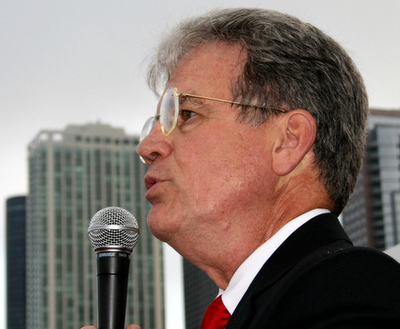
As if uninformed media types were not problematic enough, the voices are now rising up in Washington, as well. Consider Senator Tom Coburn (R-OK, below-right), who can’t figure out why Louisiana has not spent all of its recovery money from Katrina yet. Said Coburn,
“…serious questions need to be asked about whether this money was appropriately designated as emergency funding."
Coburn, and others in Washington who have not really experienced or seen the devastation in Louisiana, somehow feel that in five years a state’s entire infrastructure can be rebuilt. He evidently did not believe the experts who forcasted it would take at least a full decade to restore Louisiana. Add to that a fully incompetent Mayor in New Orleans (Ray Nagin) and a governor who was in way over her head when Katrina hit, and you’ve got $3 billion left unspent in Federal dollars. Tom, come see us in Louisiana and we will fill you in on how this stuff works. Until then, reserve comment please.

Between massive media and uninformed elected officials, Louisiana is getting an undeserved bad rap. The most extreme statements and stories are the ones that make headlines. Take Governor Haley Barbour of Mississippi(below,left), our next door neighbor, who complained this way:
“ The biggest negative impact for us has been the news coverage. There has been no distinction between Grand Isle and Venice and the places in Louisiana that we feel so terrible for that have had oil washing up on 'em.”
It is old school reasoning at its worst. It bases itself on this maxim: Keep us out of the headlines and we’ll handle our own business. Barbour, 63, mostly allocates his time these days to promoting anti-obesity campaigns with Michelle Obama, and supporting other Southern state governors who like to celebrate Confederate History Month.”

Barbour rose to the occasion during Katrina, but his short memory apparently keeps him from recognizing that millions of Federal dollars may not have reached Mississippi, had it not been for competent media coverage of Mississippi, where 231 people died during and after the storm and thousands were rendered homeless. Louisiana was the focus at the time. Media broadened the view to include Mississippi.

Interestingly enough, the public seems quite tuned into the media right now. PEW research conducted polls that indicated, “Fully 67% say they have a lot (20%) or some trust (47%) in information on the oil leak coming from news organizations. That compares with 51% who have at least some trust in information from the federal government and 39% in information from BP.” (Ahem…are you listening Haley and Tom??)

The trust level among the public has much to do with the emergence of digital media. If you want to see how effective new media is in covering this disaster, take a look at the Washington Post’s Time & Space tool.

After you have spent some time there, check out “Information is Beautiful,” in which the spill is put in perspective. It is here you will learn things such as the fact that the spill encompasses an area that is bigger than the entire country of Jamaica.

For an interactive map that allows you to see the various effects of the spill, check out the Louisiana Bucket Brigade's topically divided tool. Here you can see focused impact graphics. For example, if you would like to see the exact areas where residents’ livelihoods are threatened, you can zoom in on just that. Or, perhaps you would like to see just the affected areas where oil has been seen on shore so far. Further, you can zero in on the areas where birds or marine wildlife are threatened.

These are just a few examples, but the result is this: Traditional media is working hard to convey information to you about the spill. But digital media is allowing you to truly learn about it through interactive visual representations. So, what would you rather? Pundits or pictures? Politicians with misguided agendas, or graphics that you control in your quest to understand the biggest environmental disaster in our history? What the talking heads (syndicated or elected) fail to recognize is that we citizens now have resources we did not have in the past. We can click and drag and link to our heart’s content. And sometimes we can even find the factual errors in columns like…say…Froma Harrop’s. (Froma, for the record, Katrina’s devastation was mostly caused by ill-conceived levees that were poorly constructed. So to call it an “act of nature” is incorrect. Oh, and about Texas being able to “move beyond its dependence on oil?” Where do you think the money came from for Texas to industrially diversify? BIG OIL!)

The moral of this story is clear: Traditional media is doing a respectable job of reporting and chronicling this spill. But even print media's greatest proponents know it is almost impossible to compete with technology that allows us to watch the disaster unfold -- on our cell phones. It is history in the making, just as Vietnam was notably the first televised war. Digital media is making it possible for you to see it in real time with your own eyes, and to monitor its progression. We need this confluence of information. Now, get going…you’ve got a lot of surfing to do.

Friday, June 18, 2010

HOW MANY JOE BARTONS ARE THERE IN WASHINGTON?

Question of the day: “Who the hell is Joe Barton?” I don’t know about you, but I had never heard of the guy until I watched him sitting before a Congressional committee apologizing to BP’s CEO for what he called President Obama’s “shakedown” of BP yesterday. Barton would have us envision some thugs strong-arming BP into coughing up $20 billion. Gee, Joe, did Obama have a cigarette hanging out of the corner of his mouth, and did they shine a blinding light in the CEO’s face until he promised to ante up?

Joe Barton, as it turns out is a Republican congressman from Texas, who was first elected to public office in 1984. Before that, he was a consultant for Atlantic Richfield Oil and Gas Company. It bears mentioning that of all industries, oil and gas has donated more money to Joe Barton’s campaigns over the years than any other industry. It’s public record. You can look it up. I did. The numbers tell the story. Barton is absolutely beholden to big oil. In all, oil and gas has contributed approximately $1.5 million to Joe Barton. Among all the members of the House of Representatives, Barton ranks highest in the dollars contributed to his campaigns by oil and gas. So, when Joe Barton sat in front of America and apologized to BP, he was thinking of one thing only – Joe Barton.

If there was a shakedown, it was executed by Republican heavyweights, behind closed doors, against Joe Barton. Barton was reportedly threatened that he would lose his seniority if he did not retract his apology. He did. Just hours after he offered BP his heartfelt apology, he publicly stated that BP should be financially responsible for the catastrophe. His statement sounded ridiculous and coerced after what he had said earlier. To use one our Southern expressions – Joe Barton showed his ass when he apologized to the company that caused the biggest environmental disaster in the history of the United States.

In case you are one of the four people in the U.S. who did not hear this yesterday, watch this:


Note to Joe Barton: So go live somewhere else; maybe one of those places with the funny names, like “Uzbekistan.” However, before you pack, you should know that in Uzbekistan if you started a sentence with “I do not want to live in a country where any time a citizen…” you would probably find yourself the subject of a different kind of governmental shakedown. Right now, you live in a country that offers you the freedom to say the stupid things you said yesterday. You used your freedom of expression irresponsibly. Gosh, Joe, after 26 years in Congress, I would think that by now you would know what not to say.

So, how many Joe Bartons are there in Washington? Well, the Center for Responsive Politics, the research group that has been tracking U.S. politics for a quarter of a century, reports that in 2009-2010 the top six beneficiaries of oil and gas money are:
Blanche Lincoln (D-AR) $286,400
David Vitter (R-LA) $242,600
Lisa Murkowski (R-AK) $209,826
Dan Boren (R-OK) $139,700
Robert Bennett (R-UT), $138,400
Roy Blunt (R-MO) $133,100

Joe had an off year – he only got $100,470.

Here’s a snapshot of how the above top five operate: Murkowski (below, left) recently blocked a bill that would raise an oil company’s financial liability after a major spill from $75 million to $10 billion. Environmentalists refer to Lincoln as “Big Oil Blanche,” possibly because she helped the Bush/Cheney regime push through $14 billion in tax breaks for big oil. For his part, Louisiana Senator Vitter introduced legislation in May that would limit the amount of legal damages BP would be responsible for to the last four quarters of profit. Boren vigorously supported The Energy Policy Act of 2005, legislation that provided the oil industry billions in government subsidies. Bennett has come out against legislation that defines goals for a 40 percent reduction in oil use by 2025. And Blunt? Well, he accepted a $1000 check from Haliburton early this month, at the same time his House Energy and Commerce Committee was investigating Haliburton’s possible role in the BP oil spill. The list of Washington legislators who are heavily subsidized by the oil and gas industry is somewhat shocking. Or is it? We “little people,” as BP’s Chairman Carl-Henric Svanberg refers to us, may still be somewhat naïve about the ever-sturdy handshake relationships between big oil and our government.

Until the current disaster, most of us did not know that oil companies were the ones writing the regulations for the oil industry. If the BP spill had not happened, perhaps the Interior Department’s Minerals Management Service would continue to operate in its Bush/Cheney-era inept fashion and we would be none the wiser for it.

The moral of this dirty story is simply that we, the small people, need to get bigger and better informed. We need to hold our government more accountable for its actions, so that it can exercise enough muscle to hold big oil accountable for its bad behavior. We cannot do that until we know more. And we cannot wait until a natural disaster, man-made disaster or environmental catastrophe to educate ourselves. My thoughts? Put down your remote, get off of Facebook and start learning. And then, deluge your Congressmen with letters, calls and visits, about what you want to happen in YOUR government.

Saturday, June 12, 2010

THE ACRID SMELL OF FAILURE

On Friday night, a group of fine Louisiana chefs will gather at a Marina in Grand Isle to cook their hearts out, so that the residents of the Gulf Coast can forget their troubles and just eat. I’m sure as much Louisiana seafood as possible will be served. The nearby murky, oil-thick water will keep them all land bound. One restaurant that will not be represented is P & J Oysters out of New Orleans. Although doing business since 1876, P & J laid off all of its employees last week. Nothing to shuck. Nothing to serve.

If you live in New Orleans, the spill is the theme right now. It runs through every conversation, every meal, every radio show and news report. People way outside of Louisiana do not seem to be quite as tuned in to the catastrophe as we are here, but maybe that’s understandable. After all, are New Orleanians fully tuned into to Nashville’s crisis right now? Not really. It seems we Americans are rather localized creatures, but the difference between the oil spill and other regionalized tragedies is that this one promises to affect every American, regardless of geography. Well-placed talking heads assure us that gas prices will go up indefinitely, domestic oil drilling is in peril and fully one-third of the nation’s seafood – from the Gulf waters – is in danger of disappearing.

There is widespread fear at the water’s edge in places like Grand Isle. If a community is built almost entirely on fishing and boating, and the water is being contaminated every day by oil that has gushed for eight weeks non-stop, what will become of the town, the culture, the people and the environment?

We are in the midst of the “information is power” age. Still, BP, the company fully responsible for this debacle, appears to be trying to limit and control information. Last week, a reporter from WDSU-TV in New Orleans went to the beach at Grand Isle and was denied access to the workers. Watch:


Despite such outrageous behavior on the part of BP, information has emerged endlessly about the company’s mishandling of the oil spill. You have to love the arrogance of a company that would mount a PR effort that tries to convince the world they’re good guys who can fix this catastrophe, right as the entire Gulf coast is drowning in their oil. So, that brings us to Dick Cheney. Huh? Well, it seems Ann Womack-Colton, Cheney’s former press secretary, has been hired to spin, spin, spin this story until her daddy takes the T-Bird away. She’s the new PR maven for BP.

Is it me or is there just a little too much corporate/governmental incest happening here? Let’s review: Dick Cheney was the Chairman of the Board and CEO of Halliburton from 1995-2000. From day one of the current spill, Halliburton has been under the microscope as the possible culprit. It was Halliburton that cemented the deepwater drill hole. It was also Halliburton that leased failed equipment to BP. Then BP hires Womack-Colton to make nice with the media and an angry public. Uncomfortably chummy, one might say. And how interesting that BP only mentioned that she had been director of public affairs for the Department of Energy (DOE) under George W. Bush. No mention of Dick Cheney.

From a strictly circumstantial standpoint, one could draw parallels between Halliburton and BP. For example, BP has come under criticism for a lack of transparency in its accounting procedures. Meanwhile, a government contract specialist turned whistle-blower revealed that Halliburton has overcharged the Pentagon for fuel charges in Iraq. Creative accounting seems to run in the BP/Halliburton family. At the very least, each has a lot to answer for, and neither has ever sufficiently cleared its image.

BP, it should be mentioned, also falsified its ability to deal with a major spill. According to Associated Press, in an oil-spill response plan, filed with the U.S. Minerals Management Service in 2008, BP assured the government it was prepared to handle an oil spill 10 times larger than the current Gulf spill. There’s more: In the 582-page document, titled "Regional Oil Spill Response Plan — Gulf of Mexico," BP clearly failed to do its homework. In the report, BP talks of possible danger to sea otters, seals and walruses. No such animals have ever lived anywhere near or in the Gulf of Mexico. It also names a wildlife expert as a consultant. The trouble is that the guy died in 2005 and the report was submitted in 2008. This is who we’re dealing with. This is BP. And this is the company that received $837 million in U.S. government contracts from the Department of Defense in 2009.

So here is what we are left with. Every effort to contain the oil so far has failed. BP will now buy oil sucking machines from Hollywood actor Kevin Costner. The company has clearly exhausted its own technological options to cap the gusher. Scientists are expressing fear that the pressure of what has already been done may cause cracks in the seabed, which could start a much greater crisis. Oil has now reached land in four states. Louisiana’s wetlands, already receding at alarming rates before the spill are slowly being destroyed. Hundreds of birds, turtles and other animals are dead or dying. And one wonders how the new PR queen will explain away published eyewitness accounts of BP scooping up carcuses of dead birds, so that they cannot be studied or autopsied. In some circles that might be called destroying evidence of the extent of the spill’s effect on wildlife.

If all of the above tug-at-your-heart stuff does not impress you, let the numbers tell the story. Bloomberg reports the oil spill may drive down the Gulf Coast’s shore-area property values by 10 percent for at least three years, according to CoStar Group, Inc., a property information service. Losses may total $4.3 billion along the 600-mile expanse from Louisiana to Florida.

So, to all of those anti-big government types out there: If anything, we Louisianans would like government to huff and puff a bit harder immediately and spread its legislative wings. The U.S. government needs to relegate BP to second string now and simply take over. If President Obama expects the electorate to stand behind him in 2012, he needs to stand up to BP right now. Elected officials in Washington up for re-election soon need to find some non-partisanship and go to bat for their constituents. Job one is stopping the oil from spewing into the Gulf. After that, BP must be held absolutely accountable for the disaster, and must pay every single American citizen for their losses. We have no time for Congressional hearings, across-the-aisle bickering or political posturing. For those who still doubt the national implications of this spill, reportedly President Obama will visit the coast again this week, and then address the nation in prime time from the Oval Office. Will he announce a Gulf recovery package that compensates the thousands of citizens and small businesses directly affected? Will the government come to the aid of places like Orange Beach, AL or Pensacola, FL, beach destinations that rely on tourism that is now non-existent? Will there be a plan and a timeline for restoring the coastline to its natural state? Stay tuned.

Wednesday, June 2, 2010

OIL AND LOGIC DO NOT MIX

Every time there is a major world-altering crisis, it seems the smartest thing humans do is find the smartest humans. So, if there is, say, a flu virus that emerges and threatens various populations, the greatest medical minds pool their cerebral resources and find treatments, or suggest necessary precautions or whatever it takes to fight the threat. If there is a world economic crisis, the greatest financial brains all throw their fiscal-loving hats in the ring and come up with some sort of plan. That makes me wonder: When the largest oil spill in the history of the U.S. happens in the Gulf of Mexico, where are the great environmentalists, marine life researchers, chemists and oil industry minds and why have they not gathered to figure this out? Is it just me, or have others wondered this, as well? I don’t know, because not one talking head in the media has yet to come forward with this query.

It is somewhat understandable that the international oil company experts have not come forward. After all, guess where the biggest oil companies are located. Give up? Watch this list: Saudi Arabia, Iran, Qatar, Iraq, Abu Dhabi, Libya, Russia and China. I rest my case. You didn’t really think Iranian oil experts were going to take a goodwill trip to Grand Isle, LA, now did you? Libyans to Biloxi? Not likely. Saudi Arabians to Plaquemines Parish? Right.

That leaves the U.S. oil companies to pitch in with boots on the ground, cutting edge tech equipment and a collaborative spirit to end this crisis before it gets bigger and badder. So, where are Exxon-Mobil, Chevron and Conoco-Philips? And why does the U.S. government continue to use knowledgeable researchers to simply identify the problem, rather than help fix it? As recently as May 31 a team of researchers from the University of Florida revealed that a hidden deep sea oil plume was headed toward the Alabama coastline, an area hugely populated by marine life. Associated Press quoted an LSU fish biologist who said, "Every fish and invertebrate contacting the oil is probably dying. I have no doubt about that.”

BP counters each such statements with its own declarations that naysayers are overstating the problem. BP CEO Tony Hayward (right)
claims that oil naturally gravitates to the surface, and sees no reason for alarm about underwater plumes. It bears noting that CEO Hayward also looked straight into a news camera last weekend and said, “There’s no one who wants this over more than I do. I’d like my life back.” So do thousands of Gulf Coast fishers and their families, Hayward. The difference is that Hayward’s life involves an annual salary from BP of roughly $1.5 million, according to Forbes. Oh, and let’s not forget his 2009 bonus of just over $3 million. Who wouldn’t want that life back? Gosh Hayward, we just can't tell you how sorry we are to inconvenience you like this. Really. We can't. Hayward, who has a tendency to speak before he thinks, also said, the oil spill is “relatively tiny” in comparison with the size of the ocean.

Clearly it is up to President Obama to convene the oil gurus, wildlife advocates and marine life rescuers, so that together they might find solutions. BP is not motivated to do so because it does not have to. The U.S. government has limited authority over BP. Obama, who spent a short three hours in Louisiana last week, has yet to take any further measureable steps toward solving this crisis since his visit. And unlike BP, he should be motivated to do so. He is now being compared to George Bush during Katrina. Talking heads are referring to the oil spill as Obama’s hostage crisis, measured in days. Politicos offer dire prognostications about Obama becoming the first one-term president since Jimmy Carter, if he does not exhibit strong leadership and become a catalyst for action in the Gulf.

The oil spill, you may have noticed, is not at the top of the media’s headline list each day, the way Katrina was. The story is not as sexy. There are no photos of New Orleans underwater. Nobody is stranded on a roof with giant signs that read “HELP!” Gulf Coast residents are not scattered coast to coast in refugee fashion. Katrina was tailor made for media drama, and make no mistake – these days, drama often trumps truth. Instead of oil spill headlines, we get juicier stories that just serve to piss us off – did you hear the one about Louisiana Senator David Vitter coming out in support of BP? True. I couldn’t make this stuff up.

You may also have noticed that George Clooney and the rest of Hollywood’s elite have not rallied to come to the aid of the fishers. No telethons, no emotional requests for immediate help. No food drives, no national coming together for the needy. Let’s face it: George and Oprah and Madonna and fill-in-the-blank boldface names know very little about small fishing towns in Louisiana that are facing extinction. You cannot really rally for something you don’t understand. And is America really going to toss coins at Louisiana just after Nashville went under water? Not likely.

We are dealing with the ultimate loss of a vital eco-system here in Louisiana. We are facing a culture shift that could significantly alter the national seafood market in a most unfortunate way. And just as New Orleans was regaining its pride and some sense of real life, we walk out of our houses on evenings when the air is still and we smell something quite foul. Is it oil, or is it chemicals used to disperse the oil? We do not know, and apparently no one else knows either. And if it is chemicals we smell, how dangerous is it to ingest them? Are there respiratory illnesses yet to be seen that may fully emerge long after the immediate crisis is negotiated down? We don’t know that, either. And since the oil spill is being reported in a rather laissez faire way, America seems to have a distorted view of what is happening here. Some people are cancelling their vacations to New Orleans. Associations are wondering if their already contracted annual conventions might be better placed elsewhere. Visitors are unsure about eating the seafood in world-famous seafood restaurants. You begin to see the trickledown effect on the state’s economy.

Right now, as a Louisiana citizen, I place this crisis squarely at the feet of President Obama. I expect him and Congress to make this oil spill every bit as much of a priority as the national unemployment crisis. I urge him to do just what I suggested earlier – assemble the great minds to find solutions, release enough funds to implement the solutions and manage the crisis on an hour to hour basis. Perhaps he could cancel his still-scheduled trip to Australia next month. I'm thinking maybe there is no pressing diplomatic business with Australia that would trump the President's obligation to manage the biggest oil crisis in the history of this country.

It matters not who is to blame here for the spill. The political ramifications of this crisis will have to wait until the human crisis is addressed and solved. Ponder this: If the oil spill resulted from a terrorist attack, rather than an accident, would our government be more mobilized to fix this? I believe they would. So why is it that the circumstances under which this happened dictate the aggressiveness or lack of such that characterizes the response? Obama and all elected officials need to get busy. Now. We cannot wait.

After all, in addition to our current Gulf crisis, be aware that hurricane season officially began June 1. The oil spill likely happened due to human error. If Mother Nature reigns terror on our little corner of the earth while the spill is still wreaking its own havoc….well, let’s not borrow trouble. Let’s just fix this – now.