 It is always astounding to me how a cultural icon’s most important works are overshadowed by fluff. Exhibit A: Hugh Hefner. Hefner, 85, has been a part of the American consciousness since the mid-20th century, when he quit his job at Esquire Magazine, scraped up a few hundred bucks from anybody who would help him, and quietly plotted the debut of “Stag Party,” a new world men’s magazine. Stag Party ran into licensing problems since there was already a magazine called “Stag,” and ended up being renamed “Playboy.” The very first issue featured a totally nude Marilyn Monroe (see cover below, left). The rest, as they say...
If you don’t dig too deep, all you find in Hefner is the above-mentioned fluff. Top heavy young girls, extravagant living, seemingly non-stop parties and lots of debauchery. That is why last week’s sudden exit of his would be 25-year-old bride made
 headlines worldwide. The China Economic Net proclaimed Hefner “dumped at the altar.” In the UK, the Independent declared, “Bad Luck, Hef – the Bunny’s Hopped it.” The New Zealand Herald ran a picture of the couple with the simple headline, “Cancelled.” Whatever Hefner does or does not do is big news in all corners of the earth, even a doomed marriage.
Who cares, right? Right. There is, however, so much more to care about when it comes to Hugh Hefner. What many people may not know is that Hefner has been what I would call a human rights and civil rights activist as long as he has been a publisher. His good works and good words have often been lost to his socially questionable lifestyle. That’s too bad, because those good works and words have changed the world.
Did you know (or remember) he used to have a TV show called “Playboy's Penthouse?” It ran for three years from 1959 – 1961. The camera would get a tight shot of elevator buttons lighting up one by one until it reached the penthouse apartment. Then the doors would open and viewers would see a party going on, people dancing, laughing, drinking, smoking.
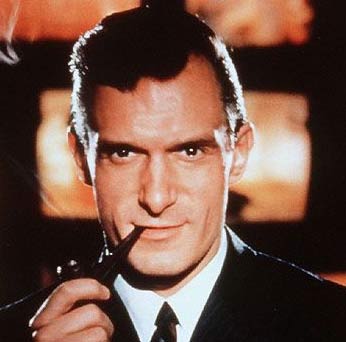 But here’s the rub: Some of the people were black, at a time when it was virtually unheard of for a TV show to feature anybody black, unless they were Amos and Andy. Bigger still was the fact that the show featured black performers, doing their thing with white performers. Unheard of. Sounds pretty tame now, but be aware that some of those black performers and party guests would probably not have even been allowed into buildings like the one portrayed in “Playboy Penthouse” in 1959. A white female folk singer performing with two black guys? Outrageous for its time.
 Hefner’s “girlie” magazine and cool TV show (that could be considered the world’s first reality show) were really his vehicle to advance his agenda. The agenda had everything to do with freedom of speech and basic American liberty. Listen as he welcomes controversial comedian Lenny Bruce to “Playboy’s Penthouse.” Looks like fun, smooth and easy, but the conversation takes decidedly issues-oriented turns to censorship, racial integration and more:
This is one of only six network TV appearances Bruce ever made. American media was afraid of the Bruce’s often acerbic and envelope-pushing humor. So afraid was America of Bruce’s stretching the limits of the First Amendment that he was arrested multiple times, banned from many performance venues and even barred from certain U.S. cities. But Hefner, recognizing the underlying theme of freedom of expression, never wavered in his support of Bruce’s career. You don’t necessarily have to approve of Bruce’s material, nor of Hefner’s, for that matter, but the indisputable fact is that Hefner advanced the cause of freedom in America.
In 1973, when the movie Carnal Knowledge was deemed obscene by several state Supreme Courts, Hefner was interviewed in his own magazine on the 20th anniversary of Playboy. His fervent dedication to free speech was never more clearly evident: “What it amounts to is that the Nixon Court, which is supposed to be loaded with what he calls “strict constructionists” of the Constitution, has ruled that the First Amendment’s absolute protection of free speech and press doesn’t really mean what it says, that certain kinds of speech and writing aren’t necessarily free at all—speech and writing that has to do with sex. The Court has decreed that the ruling elite of every local community has the power to determine what everyone else in town may read or see.”
Anyone who doubts Hefner’s dedication to the absolute nature of freedom of expression should read “The Playboy Philosophy,” a 25-part Hefner-penned series that appeared in the magazine from 1962 – 1966.
 In it, Hefner clearly explained his beliefs about social and moral issues, right on the cusp of the American sexual revolution that took off in the late 1960s. Having just returned from London where he opened a Playboy Club, Hefner had witnessed the European sexual revolution firsthand, and saw it as much as an issue of human freedom as he did a sexual/cultural shift. The philosophy extended itself to issues like freedom of (and from) religion, as well as the critical importance of the separation of church and state.
 In the 1960s Hefner befriended Jesse Jackson (below, left) and Dr. Martin Luther King. In fact, MLK was interviewed for the magazine by none other than Alex Haley (who later wrote “Roots”), who happened to be the writer who did the first interview the magazine ever featured. Hefner was passionate about civil rights and racial equality and integration. It has been a theme of his life, throughout his life.
 That’s where the fluff can really get in the way of the substance. The substance of Hugh Hefner is all about fairness, freedom and individual rights. It may be couched in lush photos of bare breasts and salacious cartoons, but if you really take time to study the history of his publication, it’s about you and me and what we deserve in a country that was built on a foundation of personal liberty. One could say that Hefner also advanced a culture that was steeped in puritanical repression to the next level of honest sexual expression. What’s not to like about that?
And so that brings us full circle back to one Crystal Harris, the 25-year-old would-be bride whose cold feet sparked headlines from sea to shining sea. Here’s the truth: Crystal Harris doesn’t matter. She may matter to her mom and dad or somebody, but she does not matter in the larger scheme of things.
 What matters about Hefner is his undying, lifelong commitment to your human and civil rights. He has long been someone I admired, if only for his unwavering efforts to open minds and hearts. I mean you have to love a guy whose left brain says, “Playboy was founded on the notion that nice girls like sex too,” while the other side says, “I urge one and all to live this life as if there is no reward in the afterlife, and do it in a moral way that makes it better for you and for those around you and leaves this world a little better place than when you found it."


 Posts
Posts

