Tuesday, June 28, 2011

THE DIRTY SECRETS OF THE DANZIGER BRIDGE

Headlines coast to coast screamed “Blagojevich Guilty” after a Chicago jury deliberated for nine days and found former Governor Rod Blagojevich guilty on 17 corruption counts. In Florida, the seemingly endless Casey Anthony child murder trial also made headlines after the defendant’s mother tried to explain away her computer searches for “chloroform,” with a straight face. But in New Orleans, all eyes were on the Federal courthouse as a jury was seated for the Danziger Bridge trial. What, no Nancy Grace, Joy Behar, Wolf Blitzer or even Dr. Drew Pinsky reports? Nothing. A quick search of the NY Times turns up nada. The Washington Post? Well, if by chance you clicked on “National” news at the top of the home page, and the once you got there, scrolled way down and clicked on “More National News,” and then once you got to that page, scrolled down to the 27th headline, you’d find an AP wire story about the Danziger Bridge story.

You get the idea. Danziger is not a term in the national consciousness. But here in New Orleans, the courthouse was packed on day one of the trial that has become so iconic to the Hurricane Katrina event, that people actually drive to the bridge just to see where it all happened. So, if you’re reading this from Salt Lake City, or Poughkeepsie, or Greensboro, maybe I should briefly recount for you what happened. At least as much as we know. What is known is that on Sept. 4, 2005, just days after the storm, two men were killed by gunfire on the bridge and four others were wounded. One of the dead was a 40-year-old disabled man who was shot in the back. To hear the accused cops (above, left) tell it, there was a distress call from the bridge area suggesting cops were fired upon. Nine other cops piled in a rented truck and rushed to the scene. What happened after that is unclear, except we know the two men were killed and four others wounded.

Now five police officers are on trial for civil rights violations, unjustified shootings and for covering up their activities. Five former cops have already entered guilty pleas to the cover up and will testify against their one-time colleagues. A detective goes on trial later in the summer. Anybody who lives in New Orleans knows something very bad happened on the bridge that day, and just about everybody believes the cops are guilty – except other cops, who never believe their brethren are guilty. Federal prosecutors allege the attacks on the bridge were unprovoked. In fact, this case may have simply faded away had the U.S. Department of Justice and the FBI not become involved in the investigation. But they did. It’s a complex series of events that led to this trial. Listen to two Times-Picayune crime reporters explain the order of what happened:

New Orleans is often aptly referred to as “The city that care forgot.” So true. The story just isn’t as “sexy” as say a Rodney King police abuse case out of L.A. back in 1991. It doesn’t have the staying power of the 1997 NYC case of citizen Abner Louima, who was sexually brutalized with a plunger handle by two cops. This is New Orleans. We made it on the media map in 2005 because of the largest natural disaster in the history of the United States. But attention spans are short and news has very little longevity in our new tech world culture. So Katrina is over. Way over. And stories like the Danziger Bridge case don’t really get much CNN/MSNBC/Huffington Post/CBS/NBC/ABC/FOX attention. Almost none, you might say.

It’s tough to compete with Blagojevich, who’s still rocking those 1970’s junior high school bangs. And Casey Anthony, the innocent-looking white girl who may have killed her baby and then gone out partying? Well, that’s ratings gold for networks like HLN. They’ve even got Dr. Drew Pinsky covering it – he’s an addiction specialist and nobody in this case is claiming addiction problems. Go figure. In his new book about Katrina, former Mayor Ray Nagin (above, right) is all hot and bothered about police corruption during and after the storm. But oddly enough, while he was mayor, the words “Danziger Bridge” scarcely crossed his lips. Although the cops in question are both black and white, the victims were all black. Where is Jesse Jackson? Where is Al Sharpton? Where’s the NAACP? Where is the Southern Christian Leadership Conference? The ACLU?

Where is the public outrage? I believe it is stuck back in 2005. “Katrina fatigue” is not just an expression. In New Orleans we can barely look back. Around the rest of the country, Katrina is a historical term now. In some ways we in New Orleans still see the storm in present tense, although certainly it fades as time moves on. But really, if you are in New Mexico, or Connecticut, or Maine or Montana, do you care about Katrina now? No. To you, the Danziger Bridge could just as easily be a place in a fiction novel as it could a real blood-soaked crossing in Louisiana. I do not anticipate a high profile for the trial outside of Louisiana, but at the same time, I know that if the accused cops walk free, the racial implications for the whole country could be dire. Stay tuned.

Tuesday, June 21, 2011

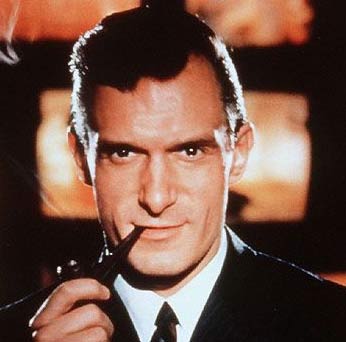
THE VERY SINGLE - AND SINGULAR - HUGH HEFNER

It is always astounding to me how a cultural icon’s most important works are overshadowed by fluff. Exhibit A: Hugh Hefner. Hefner, 85, has been a part of the American consciousness since the mid-20th century, when he quit his job at Esquire Magazine, scraped up a few hundred bucks from anybody who would help him, and quietly plotted the debut of “Stag Party,” a new world men’s magazine. Stag Party ran into licensing problems since there was already a magazine called “Stag,” and ended up being renamed “Playboy.” The very first issue featured a totally nude Marilyn Monroe (see cover below, left). The rest, as they say...

If you don’t dig too deep, all you find in Hefner is the above-mentioned fluff. Top heavy young girls, extravagant living, seemingly non-stop parties and lots of debauchery. That is why last week’s sudden exit of his would be 25-year-old bride made headlines worldwide. The China Economic Net proclaimed Hefner “dumped at the altar.” In the UK, the Independent declared, “Bad Luck, Hef – the Bunny’s Hopped it.” The New Zealand Herald ran a picture of the couple with the simple headline, “Cancelled.” Whatever Hefner does or does not do is big news in all corners of the earth, even a doomed marriage.

Who cares, right? Right. There is, however, so much more to care about when it comes to Hugh Hefner. What many people may not know is that Hefner has been what I would call a human rights and civil rights activist as long as he has been a publisher. His good works and good words have often been lost to his socially questionable lifestyle. That’s too bad, because those good works and words have changed the world.

Did you know (or remember) he used to have a TV show called “Playboy's Penthouse?” It ran for three years from 1959 – 1961. The camera would get a tight shot of elevator buttons lighting up one by one until it reached the penthouse apartment. Then the doors would open and viewers would see a party going on, people dancing, laughing, drinking, smoking. But here’s the rub: Some of the people were black, at a time when it was virtually unheard of for a TV show to feature anybody black, unless they were Amos and Andy. Bigger still was the fact that the show featured black performers, doing their thing with white performers. Unheard of. Sounds pretty tame now, but be aware that some of those black performers and party guests would probably not have even been allowed into buildings like the one portrayed in “Playboy Penthouse” in 1959. A white female folk singer performing with two black guys? Outrageous for its time.

Hefner’s “girlie” magazine and cool TV show (that could be considered the world’s first reality show) were really his vehicle to advance his agenda. The agenda had everything to do with freedom of speech and basic American liberty. Listen as he welcomes controversial comedian Lenny Bruce to “Playboy’s Penthouse.” Looks like fun, smooth and easy, but the conversation takes decidedly issues-oriented turns to censorship, racial integration and more:

This is one of only six network TV appearances Bruce ever made. American media was afraid of the Bruce’s often acerbic and envelope-pushing humor. So afraid was America of Bruce’s stretching the limits of the First Amendment that he was arrested multiple times, banned from many performance venues and even barred from certain U.S. cities. But Hefner, recognizing the underlying theme of freedom of expression, never wavered in his support of Bruce’s career. You don’t necessarily have to approve of Bruce’s material, nor of Hefner’s, for that matter, but the indisputable fact is that Hefner advanced the cause of freedom in America.

In 1973, when the movie Carnal Knowledge was deemed obscene by several state Supreme Courts, Hefner was interviewed in his own magazine on the 20th anniversary of Playboy. His fervent dedication to free speech was never more clearly evident: “What it amounts to is that the Nixon Court, which is supposed to be loaded with what he calls “strict constructionists” of the Constitution, has ruled that the First Amendment’s absolute protection of free speech and press doesn’t really mean what it says, that certain kinds of speech and writing aren’t necessarily free at all—speech and writing that has to do with sex. The Court has decreed that the ruling elite of every local community has the power to determine what everyone else in town may read or see.”

Anyone who doubts Hefner’s dedication to the absolute nature of freedom of expression should read “The Playboy Philosophy,” a 25-part Hefner-penned series that appeared in the magazine from 1962 – 1966. In it, Hefner clearly explained his beliefs about social and moral issues, right on the cusp of the American sexual revolution that took off in the late 1960s. Having just returned from London where he opened a Playboy Club, Hefner had witnessed the European sexual revolution firsthand, and saw it as much as an issue of human freedom as he did a sexual/cultural shift. The philosophy extended itself to issues like freedom of (and from) religion, as well as the critical importance of the separation of church and state.

In the 1960s Hefner befriended Jesse Jackson (below, left) and Dr. Martin Luther King. In fact, MLK was interviewed for the magazine by none other than Alex Haley (who later wrote “Roots”), who happened to be the writer who did the first interview the magazine ever featured. Hefner was passionate about civil rights and racial equality and integration. It has been a theme of his life, throughout his life. That’s where the fluff can really get in the way of the substance. The substance of Hugh Hefner is all about fairness, freedom and individual rights. It may be couched in lush photos of bare breasts and salacious cartoons, but if you really take time to study the history of his publication, it’s about you and me and what we deserve in a country that was built on a foundation of personal liberty. One could say that Hefner also advanced a culture that was steeped in puritanical repression to the next level of honest sexual expression. What’s not to like about that?

And so that brings us full circle back to one Crystal Harris, the 25-year-old would-be bride whose cold feet sparked headlines from sea to shining sea. Here’s the truth: Crystal Harris doesn’t matter. She may matter to her mom and dad or somebody, but she does not matter in the larger scheme of things. What matters about Hefner is his undying, lifelong commitment to your human and civil rights. He has long been someone I admired, if only for his unwavering efforts to open minds and hearts. I mean you have to love a guy whose left brain says, “Playboy was founded on the notion that nice girls like sex too,” while the other side says, “I urge one and all to live this life as if there is no reward in the afterlife, and do it in a moral way that makes it better for you and for those around you and leaves this world a little better place than when you found it."

Thursday, June 16, 2011

WHY TRACY MORGAN NEEDS A ONE WAY TICKET TO CAMBODIA

How interesting that suddenly, Tracy Morgan, a sort of second-string comedian, is all over the headlines. Oh no, it’s not because of his middling performance as alter-ego Tracy Jordan on the NBC sitcom “30 Rock.” It’s all about his throwback standup comedy act, which hit a wall in Nashville recently after he reportedly “joked” that he would “pull out a knife and stab that little nigger” if he found out his son was gay. It turns out an audience member was so taken aback by Morgan’s inane rant that he posted a piece about the Morgan show on Facebook. As is our cultural way here in 2011, the piece went viral, got picked up by national media and a firestorm ensued, causing Morgan to come forward to say how much he loves everybody. Right. Then comes news that Morgan is going to do some kind of something with GLAAD to show how much he really, really loves everybody. Right.

The upshot of all of this is a national discussion that is flooding the blogosphere, the airwaves and even good old print journalism about the extent of comedic license available to standup comedians. How much is too much? Is too much an oxymoron when you talk of standup routines? Is this a first amendment issue or rather a common decency issue? If you talk about your own son as a “little nigger,” is it hate speech or is it your divine right as a parent? When Morgan rants about stabbing his own son, is it funny or is it a desperate reach for a laugh when his audience has paid $86 a seat to laughs? And in a culture that decides to delete an Anthony Weiner from the public stage, why is it that a man who insults the gay population and the black population in one fell swoop is still front and center on one of the most highly-praised television shows on the air?

Whew! That’s a lot of questions, right? But doesn’t something like this merit a lot of questions? Didn’t we learn anything from the Michael Richards debacle back in 2006 at the Laugh Factory in Hollywood? That was the night Richards (below) got mad at some black hecklers in the audience and threw a temper tantrum in which he used the word “nigger” six times. Here’s how stuff like this works in our culture today: Richards, despite his very public apologies and mea culpa appearances on shows like Letterman, has had exactly four professional entertainment jobs since 2006, according to the Internet Movie Database (IMDB). Nobody is denying Richards his first amendment rights. But the American public has made it clear they can’t find much to laugh about when he speaks anymore. Once you do what Richards did, maybe you have to turn in your funny card and do exactly what he did next – retire from show business and take an extended trip to Cambodia. Really.

The issue here is not comedy. It is not Tracy Morgan. It is not how many people are offended. The issue here is respect. Comedians are divided on how to react to Morgan’s behavior. Some, like Louis C.K., came forward to say that Morgan was just “fucking around” and didn’t mean what he said. Said Louis, "Tracey Morgan said something wrong, evil, cruel, ignorant and hilarious. He was on a comedy stage, not at a pulpit.” Implicit in his remarks is the thought that since Morgan was on a comedy stage, respect for his fellow human beings is not required. Others, like Chris Rock (above, right), who initially defended Morgan’s right to say whatever he wants to say on stage, later came back with, “Wow, I get that shit wasn’t called for and I don’t support it at all.” And then there was Joan Rivers: “He’s lost his gay fan.” And, “I’ll tell you, the biggest crime of all is that Tracy Morgan isn’t funny. You know what he should be apologizing for? For charging $86 to see him.”

Indeed. But what no one seems to be addressing is the assumption among comedians that no matter what they say, who they hurt, how grotesque the images they put forth, they get a pass because it’s “comedy.” Here’s the thing: Comedy is cultural commentary. That’s really all it is. Comedians basically do the same thing that Rush Limbaugh, Chris Matthews, Rachel Maddow, Keith Olberman, Glen Beck and all the other talking cableheads do. They offer their take on the current state of our culture. As I see it, Morgan’s take on the current state of our culture is that gay people are somehow “less than,” and that probably they should be eliminated. And as I see it, Morgan somehow still believes there is a place in our national conversation for the word “nigger,” a stupid, throwback, throwaway word that we have been trying for decades to evolve out of the English language.

You know, besides the fact that Morgan appears to be somehow surviving this ridiculous tirade, with even his “30 Rock” boss, Tina Fey still somewhat reluctantly embracing him, (below, left) here’s what bugs me: The historic Ryman Auditorium in Nashville (which used to be the home of the Grand Ole Opry), where Morgan had his comedic tantrum, seats 2400 people. Let’s do the math: 2400 x $86.00 = $206,400. After paying the venue, the promoters, the tour expenses and his agent, manager, etc., let’s say Morgan gets 40% of the gross. That means that for denigrating millions of Americans in the name of comedy, Morgan earned upwards of $80 grand that night. And it gets worse: For those Americans who vaguely knew who Morgan was prior to the Nashville performance, now every American who has been conscious the last week or so knows who he is. You know the old, “I don’t care what they say about me, as long as they spell my name right” routine? My biggest concern here is that now Morgan is a household word whose ignorant cultural trespasses may imprint him on the American psyche as a “bad boy comic” who just said some stupid stuff once in Nashville. All that, and here I was hoping he'd go be Michael Richards' roommate in Cambodia.

So, in the end, does it all simply mean that in America, saying you will cut up your “little nigger” kid with a knife if he says he’s gay is worth $80,000 and an ongoing national television career. How did we get here?

Tuesday, June 14, 2011

THE CONGRESSMAN'S FATAL FLAW

Some people ask me why I haven’t said or written much about the Anthony Weiner story. After all, in the past couple of years I have been all over the John Edwards debacle (which many liken to Weiner’s current situation), Spitzer, Clinton, et al. As anyone who reads my words knows, I’m not a fan of John Edwards. He’s the definition of political sleaze. The fact is, I don’t see Weiner’s downfall – and it is a downfall – in the same category as the other boys. The others, as well as John Ensign, Chris Lee (the NY Congresssman who resigned after shirtless Craigslist ads surfaced), Larry Craig, David Vitter, are somehow easily grouped together under the heading of “Washington sex scandals.” Weiner’s political and personal demise are somehow different – I won’t go so far as to use the word “pathetic,” but certainly pitiful.

So, why do I pity Anthony Weiner? To really get a grasp on what drove the guy to take pictures of himself nude and semi-nude, I think you need a mental picture of who he is – or was. Raised in Brooklyn as part of a Jewish family, Weiner’s early life reads conventional. Middle class, hockey player, good student, B.A. in poli-sci and a first job working for Congressman Chuck Schumer. It was probably during the stint with Schumer that Weiner, who reportedly had earlier aspirations to be a TV weatherman, found his activist voice. Based on his geography and environment, it is not surprising that voice became almost radically liberal. Over the years, Weiner ascended the political ranks steadily and some might say quickly. Now a Congressman, Weiner says mayor of New York is the only job that looks better to him than the one he currently holds. Up until this month, many believed he was a shoe-in for the job. He is often described in terms like brash, abrasive, aggressive, loud and demanding. And his constituents like the fact that he gets things done. Things that matter to them. By all outward appearances, Anthony Weiner was an up and comer, who at 46 probably had decades of political life left in him, and likely would have channeled some of his boundless energy and respectable work ethic into real progress for New York.

So many people do not understand the internal pressure that men in their 40s often feel. My take on the Weiner drama is that the pressure to produce and succeed got the best of him. And I do not in any way apologize for his Twitter idiocies, but I do get it. There is a window of opportunity in America for men to “make it.” In parallel, there is a window of opportunity for men to feel hot and attractive. The windows on both often begin slowly to close after the late 40s. Weiner is 46 years old. And then there is that old favorite, testosterone. So let’s do the math. Career aspirations/expectations + age + sexual drive = what? I would say in the case of a rather arrogant, ambitious public figure the equation can equal disaster. Personal disaster that rapidly becomes public.

I have watched many men fall to their own fatal flaw of self absorption. If the whole world continually tells you how exceptional you are and what a wunderkind you are, maybe you might start believing it. I had a smart grad school professor who once said, “People are often what you invite them to be.” Did New York invite Anthony Weiner to be full of Anthony Weiner? Was he powerless to fight the allure of self-absorption? I think so.

Here’s the sidebar to all of this: What Weiner did is the same thing that millions of men – and women – do every day. Did you think somehow that all of the visual technology we now have at our fingertips was not going to become part of the sexual landscape? We’re an increasingly visual culture that was already an off-the-map sexual culture. Smart phones and Twitter just gave us the necessary tools. If you are one of those people who read this and think, “I would never do that,” more power to you. But if you think a lot of people you know aren’t doing it, you may be deluding yourself. And if you think Anthony Weiner is the only legislator doing it, I beg to differ.

So, why then are we passing such puritanical judgment on the guy for being sexual and visual? It is because our traditional American moral code tells us what he did was bad. But for my part, I don’t think suggestive pictures sent to young women are going to kill his career. Lying will do that all by itself. Here is Weiner speaking to CNN’s Wolf Blitzer on June 1:

And here he is on ABC’s Good Morning America:

Step one in Weiner’s political demise was arrogance and his belief that manipulating words would be all that was needed to cover his ass (think Bill Clinton - “I did not have sexual relations with that woman”). But his ultimate fall from the mountaintop had everything to do with his lies. America may have forgiven him his sexual trespasses, his self-absorption, his need to be seen by young women, his well-known brash behavior. America will not forgive the lies.
I believe we will see Anthony Weiner resign by the end of this week. Call it a hunch. Stay tuned.

Monday, May 23, 2011

WHO SAYS TWITTER MAKES ME STUPID?

In case the name Bill Keller doesn’t ring a bell, he’s the executive editor of the New York Times. Keller, somewhere in his early 60s, has been a print journalist his entire adult life, and has worked for the Times in one capacity or another for most of his career. So, it is not surprising that he is evidently feeling somewhat intimidated by the emergence of new media, particularly Twitter. Last week, Keller wrote a piece called “The Twitter Trap,” in which he seems to be agonizing over up and coming technology that enables citizens to learn of events in an immediate way. Said Keller, “Whether or not Twitter makes you stupid, it certainly makes some smart people sound stupid.”

Oh Bill (pictured below, left). Bill, Bill, Bill. Do you know how typical you sound of journalists of your generation? And guess what Bill. I’m not much younger than you, and still I can see that you are feeling threatened by pathways of information that do not require your lifelong accumulation of skills. Let me spell it out: It was via Twitter that the world first learned of the unpredictably safe landing of U.S. Airways Flight 1549 in 2010 by Captain Chesley Sullenberger. Remember the great earthquake of 2008 in China? Twitter. Oh, and Michael Jackson’s death? First reported by TMZ.com when major news organizations were unsure whether it was a hoax or not, the story went worldwide via Twitter minutes later. And then, of course, there was the big daddy tweet of them all: Former Defense Secretary Donald Rumsefeld's chief of staff Keith Urbahn first let the world know about the raid on Osama bin Laden's compound - via Twitter. I could go on, but you get my drift – print journalism is not dead, but it’s not keeping up with consumer demand.

In the above-mentioned column, Keller wrote:
“My father, who was trained in engineering at M.I.T. in the slide-rule era, often lamented the way the pocket calculator, for all its convenience, diminished my generation’s math skills. Many of us have discovered that navigating by G.P.S. has undermined our mastery of city streets and perhaps even impaired our innate sense of direction. Typing pretty much killed penmanship. Twitter and YouTube are nibbling away at our attention spans. And what little memory we had not already surrendered to Gutenberg we have relinquished to Google. Why remember what you can look up in seconds?”
I’d like to answer that: Now that the calculator eased our way to solving math dilemmas, maybe our brains have more room for other endeavors. Do you really believe your “innate sense of direction” is hampered by a G.P.S.? Come on, Bill. Typing killed penmanship? Here’s all I have to say about that…R.I.P. penmanship. The culture evolves in a way that streamlines life. That is what is happening now.

And don’t just take it from me, Bill. Listen to what Gizmodo’s Mat Honan has to say about your ramblings:


So, Bill, I’m just wondering: Should we also worry about digital cameras that may have killed the lost “art” of the darkroom? Or, what about birth control devices that now allow us to have as much sex as we want to for pleasure instead of simple procreation? And how about Rachel Ray and her ilk who taught us how to make a full dinner in a half hour? Did Miss Ray effectively kill the all-day cook-a-thons that were once a part of our culture? I could go on, but you get my drift. It is called innovation and progress, Bill. Did you also badmouth that first computer they put on your desk at the Times? Are you similarly reluctant to embrace dating web sites because they eliminate the need for endless small talk, smoke and alcohol in a bar you didn’t want to be in in the first place? Bill, catch up. It is, contrary to your apparent preference, 2011. You do not have to wear a dark suit to work every day and you do not have to even go to work every day if you have yourself properly outfitted elsewhere with the necessary technology.

Oh, and Bill...guess who agrees with me about social media -- your own CEO, Janet Robinson, who told the graduates at NYU's Stern School of Business: “The New York Times has more than 3 million Twitter followers on its main account.That is nearly 2 million more than any other newspaper. We’re proud of that….For some people, all the news that’s fit to print means all the news that fits in 140 characters or less in real time.”

She also said this:

“We used to wonder: If a tree falls in the woods and nobody is around to hear it, does it make a sound? Now we ask: If a tree falls in the woods and your smartphone doesn’t buzz, did it happen?” Janet rocks. And briefly.

I am so discouraged by men and women of my age and older who simply are not ambitious enough to learn the advantages that technology affords us. Keller says Twitter and YouTube are “nibbling away at our attention spans.” No Bill, that is not the case. Our attention spans have become shorter because the amount of stimuli around us has increased exponentially, and the sheer volume of information that confronts us requires greater mental time management. We have more to see, hear, learn and discuss because we have allowed ourselves to live outside the 1950s box. The brevity of Twitter and YouTube are simply the current day results of 1980s MTV fast videos, which were that era’s result of mid-century TV sitcoms that told a story with a full conclusion in 24 or 25 minutes. Those sitcoms were really the result of earlier 20th century radio programs that lasted 15 minutes. Those 15 minute shows were the result of an industrial revolution that shortened the waiting time for various types of societal gratification.

With all of that said, I will add that social media has not yet firmly found its place in our culture. It is still used more for entertainment than for business, education, finance, government, and other essentials. We still have the Facebook user who posts, “I am at the grocery store buying peaches.” Who cares? We still have Twitter users whose real goal is only to see how many other Twitter users they can persuade to follow them. We have pop culture celebrities like Ashton Kutcher (above, left) who somehow feel validated because his Twitterverse followers number in the millions. And there is the dark underbelly of it all, such as individuals who lure people with false promises on Craigslist, simply so they can commit crimes including rape and murder. Bill, nobody said we are there yet. But we are making progress.

Down the road, I fully anticipate mainstream media’s acceptance of social media as an equal. We must bear in mind it is in its infancy. Besides Twitter and Facebook, most social media companies have not yet found their footing or their patrons. I envision a social media world in which the free enterprise system exercises its considerable gravitas and earns itself a new and more efficient way of doing business. In the meantime, it matters that we continue to teach people how to write a decent sentence, how to appreciate literature that relied on more than 140 characters to get its point across and how to look at one another eye to eye and tell the truth.

But Bill…listen….about those 2,000-word stories you are still allowing in the Sunday Times? I suggest you let your reporters and writers in on what I tell my journalism students – learn how to say more using fewer words. It’s what I call the Greenberg Rule. There is no turning back, and blame it on Twitter if that makes you feel better, but it really is more about information supply and demand.

Wednesday, May 18, 2011

YET ANOTHER REASON NOT TO LIVE IN INDIANA

Picture this: It is 3 a.m. and you are sound asleep. The house is dark. Your kids are asleep down the hall. Suddenly and without any warning, the front door of your home is kicked in and several men enter the house. You can’t see them because the house is dark. What would you do?

If you own a gun and you can get your hands on it quickly, you’d probably use it, right? You would do whatever it takes to resist the intruders and protect your home and your family, right? Instinctively, you switch on a light to see who you’re dealing with. It turns out your unwelcome intruders are cops. What are they doing there and what can you do about it? Well, as it turns out, if you’re in Indiana, there is absolutely nothing you can legally do about it. This week, the Indiana Supreme Court sent down two outrageous rulings: First, last Monday the court ruled police serving a warrant may enter a home without knocking if officers decide circumstances justify it. (Previously, police serving a warrant had to obtain a judge's permission to enter without knocking). Then, three days later the court said this:
"We believe ... a right to resist an unlawful police entry into a home is against public policy and is incompatible with modern Fourth Amendment jurisprudence," David said. "We also find that allowing resistance unnecessarily escalates the level of violence and therefore the risk of injuries to all parties involved without preventing the arrest."
In simple terms, your home in Indiana is no longer a sanctuary. It is fair game for law enforcement officers to simply barge in and do what they wish. If you put up a fight, you are viewed as potentially violent and therefore in violation of the law. Oh, and that Fourth Amendment they mentioned? Just as a refresher: The Fourth Amendment to the U.S. Constitution ensures this legal right -- “The right of the people to be secure in their persons, houses, papers, and effects, against unreasonable searches and seizures, shall not be violated, and no Warrants shall issue, but upon probable cause, supported by oath or affirmation, and particularly describing the place to be searched, and the persons or things to be seized.”

Indiana evidently feels secure in its imaginary power to defy the U.S. Constitution. I can’t help wondering: Since when is the U.S. Constitution negotiable? So, you may wonder why this came about. It seems that recently in Vanderbergh County (the county seat of Evansville), police were called about a domestic disturbance. When they arrived at the home, the male resident resisted their entry and shoved a cop. He was subsequently neutralized with a stun gun. Indiana apparently doesn’t take kindly to cop shoving, so a brouhaha ensued that went all the way to the Indiana Supremes, who issued the aforementioned rulings.

So here’s the problem (besides the Constitutional fuzziness here): What if, for example, you are a single woman in the house by yourself and suddenly the cops burst into your house? What if it turns out they actually had the wrong address and they were supposed to be investigating the house next door? Do you have a right to resist or are you suddenly a criminal if you do? Or, consider this: What if an intruder who is not a cop bursts into your house and announces he is a police officer? Suppose his goal is rape and/or robbery and he accomplishes one or both of his aims?

How is Indiana Supreme Court (left) going to justify that? Here’s how: The prevailing wisdom of the Indiana Supremes is that you have a legal right to file a civil suit against the above-mentioned cop with the wrong address or the robber/rapist who defiles you and your property. Seriously, that is what Indiana says you can do about it. First, how far do you think you’re going to get by suing a cop who entered your home with the full blessing of the highest court in the state? And if you sue the robber/rapist, hasn’t the harm already been done? What good will a law suit do?

The bigger implication here is even scarier. We have already lost almost our last shred of privacy in this country. Whether you know it or not, you are on camera almost every time you go anywhere in public. Security cameras on private properties and businesses share intrusion of privacy rights with city-owned cameras used in the name of public safety and security. So, the last bastion of privacy you had was your home. Indiana has now taken that away from you with the full blessing of the judicial system. What if their actions are emulated by other states and ultimately sanctioned by the highest court in the land?

Make some noise, America. Speak up now. If you don’t, you’re about to be reduced to a caged animal in your own space, and the only ones with the keys will be the men and women in blue. Is it just me or is there something distinctly un-American about this? Oh, by the way: In Evansville, IN, you can join the police department at age 21 with a GED. You don’t even have to have really gone to high school. This might be who knocks down your door in the middle of the night. I don’t know about you, but it makes me just a little bit uneasy.

Wednesday, May 11, 2011

THE JOURNEY OF RECONCILIATION

This month marks the 50th anniversary of the Freedom Riders, a group of young men and women who bravely boarded interstate busses en route to Southern states, in an effort to challenge racial discrimination laws. The activists would be seated interracially on public transportation, and blacks would even sit up front, which was strictly outlawed at the time. Predictably, the Freedom Riders met with mob violence in various Southern cities, with the most vicious attack culminating in a bus being set on fire and the door blocked so riders could not disembark. Somehow they did manage to exit the bus, only to be brutally beaten. Efforts to lynch some of the riders failed, but mob violence would follow the group city to city. Whites who tried to help the battered blacks were roundly ostracized by their communities. I could describe the subsequent bloody beatings with iron pipes and wooden planks, the inhumane treatment of those who ended up in the Mississippi State penitentiary and the law enforcement officers who stood by and allowed the riders to be battered into unconsciousness. But it’s all in the history books and archives of the civil rights movement.

Instead, it seems appropriate to mention something that happened many years before the 1961 Freedom Rides. It was called the Journey of Reconciliation, a bus trip by 16 men, (above, right) blacks and whites, out to accomplish what their 1960s counterparts would replicate. It was led by Bayard Rustin,(left) a 37-year-old black man with a long history of battling against the widespread racial discrimination of the early to mid-20th century. Today, the late Rustin is not a household name like other civil rights activists, but it was he who really stood up to the white establishment and fought racial inequality. Later in his life, he tried to do much the same thing for the civil rights of gay Americans. Rustin was a man who truly walked the walk.

Here is what Rustin and his Journey of Reconciliation companions (eight blacks and eight whites) were up against in 1947. The U.S. Supreme Court had ruled that racial discrimination in interstate travel defied the U.S. Constitution. Rustin and company were out to see how that was playing in the deeply racist Southern states. Much like Dr. Martin Luther King, with whom Rustin (right, pictured with Dr. King) would later ally himself, the 16 men planned on non-violent, civil disobedience. As we later saw in the 1960s urban riots, non-violence is tough to maintain, but Rustin and his cohorts did it. But here is what happened: Along the way, five blacks and five whites were arrested at various times. Rustin himself ended up on a chain gang in North Carolina, where the treatment was reportedly so brutal and inhumane that the chain gang system was ultimately outlawed.

It has been widely reported that after Rustin was arrested in North Carolina, the presiding judge said this to the white members of the Journey: "It's about time you Jews from New York learned that you can't come down here bringing your niggers with you to upset the customs of the South. Just to teach you a lesson, I gave your black boys thirty days on the chain gang and I give you ninety."

Such was life in the deep South (even in the judicial system) in the 1940s. Remember, this was way before Rosa Parks (below, left) took her seat at the front of the bus. It was also long before the landmark ruling Brown vs. Board of Education, in which the U.S. Supreme Court said segregating schools was unconstitutional. It wasn’t until 1967 that blacks and whites could even legally marry in this country, and that too had to be dictated by the Supreme Court. It was, to understate it…a different time in America.

By 1961, when the Freedom Riders boarded busses to push the segregation envelope to its extreme, the U.S. was still deeply rooted in its post-slavery mentality. Blacks were begrudgingly tolerated as long as they shut their mouths and didn’t cross any societally-dictated lines. But often forgotten is the 1947 Journey of Reconciliation. Rustin and his group were pioneers. The Freedom Riders were soldiers in the seemingly never-ending war on racism.

Having lived through those tumultuous 1960s, when the Civil Rights movement reached its bloody zenith, I still say that racism today is far more pervasive and divisive than it was then. Back then, society was unfortunately organized around racism. Today it is not. Today racism is more deceptive. You see it in the offices you work in, when equally qualified individuals are up for the same job, but the white male establishment chooses one of its own for the promotion. You see it in school, where the black kids all sit together in the classroom across from the white kids. You see it on television, where it is rare for a lead role in a fictional drama to be played by a black actor. You see it in the movies, where romantic stories are generally built around white characters.

So, nobody’s using separate drinking fountains anymore, or banning entire population segments from lunch counters, or giving whites preferential treatment on public transportation. Instead, racism rears its aged head in more institutional ways. How many fingers do you have left when you try to count the number of black CEOs of Fortune 500 companies? What’s the percentage of black elected officials in the 112th U.S. Congress? I’ll help you on that one – it’s 9.66%, far below the percentage of black Americans, according to the U.S. government’s own stats. How many blacks make it in to med school in America? According to the American Association of Medical Colleges, in 2010 there were almost 50,000 active white enrollees in the nation’s medical schools, vs. just over 5,500 blacks.

Unfortunately, activism is not the main event in America anymore. Where are the Bayard Rustins of the world now? Twenty-five years from now will Congress, corporate America, television, movies and med schools still be lily white? I’m an optimist, but I’m also a realist. Twenty-five years ago was 1986 – do you sense a major shift in the arduous climb toward racial equality since 1986? Neither do I. But still, I can’t help thanking Bayard Rustin and his associates, and the many courageous Freedom Riders of 1961 for all that they did. I’m waiting for that same new day in America that I was waiting for back in the 1960s, but no matter what happens next, what happened back then was nothing short of exceptional.

Sunday, May 1, 2011

STAGE PRESENCE

At the recent White House Correspondents Dinner, President Obama took almost 19 minutes to address any number of recent critics. Oh yes, Donald Trump was there. By the way, what was Donald Trump even doing there? One has to wonder if he regretted RSVPing to this one. If you want to see the intersection of smart humor and real class, watch this guy. Possible future Letterman replacement? Hmmm. I'm just sayin'.

Friday, April 29, 2011

NOT QUITE PRESIDENTIAL

It took would-be presidential candidate Donald Trump only about 25 seconds to prove how non-presidential he really is. Listen to what he said to a group in Las Vegas last night: