Showing posts with label Martin Luther King. Show all posts

Sunday, March 25, 2012

THE FIRST DEGREE MURDER OF TRAYVON MARTIN

Americans, who seem to like to tie up controversial historical periods in neat little packages, tend to call the years 1955 – 1968 the “Civil Rights Era.” Giving the struggle for racial equality a timeframe with boundaries allows many people to believe that some level of equality was achieved. The parents of the late Trayvon Martin would undoubtedly disagree.

On February 26, Trayvon Martin, 17, a Sanford, FL high school student, left his father’s gated community to walk to a nearby store. George Zimmerman, 28, a self-appointed neighborhood watch captain who was not affiliated with any official law enforcement organization, murdered Trayvon Martin because he thought the boy looked “suspicious.” You can safely substitute the word “black” for suspicious. Trayvon Martin was guilty of nothing more than walking to the store….and being black. His death fully supports the contention of many of us who lived through the “civil rights era” that racism in America is not only alive and well, but it is far more aggressive and dangerous than it was from 1955 to 1968.

There are many unanswered questions about this murder. First, why was an un-appointed “neighborhood watch captain” carrying a gun in a suburban neighborhood? Second, why has the murderer, George Zimmerman,
(left) not been arrested and imprisoned for first degree murder? Further, when a 911 operator asked Zimmerman if he was following Martin, Zimmerman said he was. The 911 operator clearly told Zimmerman not to continue pursuing Martin, but he did, until he murdered him. Why did Zimmerman continue his vigilante pursuit after law enforcement instructed him not to? Are we a nation of laws or does anyone now have the right to pursue anyone on the streets of America? Martin was unarmed and in possession of two items when police found his body – a package of candy and a can of iced tea. Zimmerman claims he killed Martin in self-defense. The police did not test the killer for drugs or alcohol, and took his word for it that it was self defense. He was not detained or arrested. Why?

The United States Department of Justice has strict guidelines for neighborhood watch personnel. First, they are to be trained for their work by law enforcement officials. But more importantly is this passage from the Neighborhood Watch Manual, published by the DOJ in 2010: “Patrol members should be trained by law enforcement. It should be emphasized to members that they do not possess police powers and they shall not carry weapons or pursue vehicles. They should also be cautioned to alert police or deputies when encountering strange activity. Members should never confront suspicious persons who could be armed and dangerous.” There is no disputing the facts that George Zimmerman defied these rules by carrying a gun and by confronting Trayvon Martin. So, again, why is he not in jail charged with first degree murder?

Similar incidents happened during the defined Civil Rights Era. In 1955, Emmett Till, (below, right, with his mother, Mamie Till Mobley) a black 14-year-old boy, was beaten, his eye gouged out and murdered by white men in Mississippi when he was suspected of flirting with a white woman.
Till’s death touched off not just a national outpouring of rage, but one that became international in scope. Some say it was the true beginning of the Civil Rights Movement. His killers were brought to trial, but allowed to maintain their freedom. Was it karmic that both later died of cancer? You will have to decide that for yourself.

Fast forward to this week: Deryl Dedmon, a white teenager pleaded guilty to murder and a hate crime for running over a black man with his pickup truck. The victim, James Craig Anderson, 47, was mercilessly beaten before Dedmon deliberately drove over his body. Mississippi prosecutors said Dedmon and others had targeted blacks for harassment before, usually homeless or drunk people who weren't likely to report it to police. Dedmon, 19, was sentenced to two life sentences. In handing down the sentence, Hinds County Circuit Judge Jeff Weill Sr. brought up 1964 murders of three civil rights workers who were murdered and buried in an earthen dam in a rural area that became known as "Mississippi Burning."

“All the hard work we have done to move our state forward from that earthen dam in Neshoba County to here has been stained by you,” Weill said . “A stain that will take years to fade.”


In truth, it will not fade at all, just as the brutal murder of Emmett Till still stains our national consciousness. However, unlike Anderson’s murder, the murder of Trayvon Martin has the potential to incite the same national (and perhaps international) rage that followed Till’s murder. This week, the FBI and representatives of the DOJ visited Martin’s parents,(above, left) Tracy Martin and Sybrina Fulton, in an investigative attempt to determine if Federal charges will be used on George Martin. They will no doubt ponder this question: Were Trayvon Martin’s civil rights denied when he was not allowed to innocently walk down a suburban street toward his father’s home? While the answer is obvious, there are laws in place that must be followed to launch a Federal case.

The national outrage has already begun. President Obama said this about Martin’s murder: "If I had a son, he'd look like Trayvon. I think [Trayvon's parents] are right to expect that all of us as Americans are going to take this with the seriousness it deserves, and we are going to get to the bottom of exactly what happened." That sure sounds like Federal charges are imminent.

On March 21, thousands of people turned out for a “Thousand Hoodie March” in New York’s Union Square to protest Martin’s murder. They held up packages of skittles, cans of iced tea and carried signs that said things like, “They never stop and frisk old white guys like me.”
On Thursday, Rev. Al Sharpton joined Martin’s parents for a protest rally in Sanford, FL, where participants carried signs that said things like, “Please don’t kill my sons,” and “Walking while black is not a crime.” On the same day, the police chief “temporarily” stepped down in Sanford.

Trayvon Martin’s murder, with its racially divisive implications is not an isolated incident. In New York last month, an 18-year-old boy was murdered by a NYPD officer who suspected he was dealing drugs. The murder took place in the boy’s grandmother’s home. The boy was unarmed and did not resist the officer. The boy, Ramarley Graham, was the subject of an illegal search, since the officer did not have a warrant. Many New Yorkers claim the NYPD’s “Stop and frisk” program is based in racism. As usual, the numbers tell the story: In 2011, the publicly available stats show that a half million people were stopped under this program. Of those, 87 percent were black or Latino, and most of the program’s efforts were centered in poor, minority neighborhoods. More rallies are planned over the coming weeks in protest of Graham’s death, with the ongoing cry of “NYPD – KKK.”

Similarly, in New Orleans last week, a 20-year-old man was killed in his home by a NOPD officer who was executing a search warrant related to drug activity. The man, Wendall Allen,(right)
was black. The officer is white. Allen was unarmed. The New Orleans coroner later revealed Allen died from a single gunshot that penetrated his lungs, heart and aorta. He also revealed the gunshot did not occur at close range, meaning it is unlikely that there was a struggle with Allen before he was killed. There were five children, ranging in age from one to 14 in the house at the time of Allen’s murder.

To date, neither the DOJ nor FBI has been involved in the Allen or Graham murders. Why? How do they differ from the murder of Trayvon Martin? All were young black citizens, unarmed, not arrested for a crime and not aggressive toward their murderers.

There is a fire burning just below the surface of the American culture. It has been burning for a very long time. It is rooted in intolerance and the mistaken notion that somehow there are population segments in America that are inherently superior to other citizens. It is fueled by individuals who cannot control or alter their own intolerance of others; individuals like George Zimmerman, who committed murder and walks freely through the streets of America even today; individuals like conservative Fox TV pundit Sean Hannity, who even after being offered all the facts of Martin’s murder, said, “Isn’t it possible this was all just a horrible accident?”; individuals like wayward journalist Geraldo Rivera, who actually said that although Martin was an “innocent kid, I’ll bet you money that if he didn't have that hoodie on, that — that nutty neighborhood watch guy wouldn't have responded in that violent and aggressive way."

The true culprit here is pervasive racism. The lesson to take away from this is that there was no “Civil Rights Era.” You cannot bookend the mid-20th century effort to achieve racial equality and call it an “era.”
If bookends are important to Americans, then the civil rights era is neatly framed by murder – Emmett Till’s in 1955 and Dr. Martin Luther King’s in 1968. It is, instead, an ongoing struggle that is getting worse instead of better with time. If Trayvon Martin can be murdered in broad daylight by a private citizen carrying a gun in a suburban neighborhood, the struggle must be viewed in present tense, rather than historically. And that fire that burns just under the surface of America? It’s coming out in the open now, just as it did in 1955.

Tuesday, October 4, 2011

TAKIN' IT TO THE STREETS

Raise your hand if you’re over 50 and remember peaceful protests in the 1960s and 70s? Ah, I thought so – lots of you (okay,"us") skipped class and paraded around carrying signs that said things like, “Hell No, We Won’t Go,” and “America- Fix it or Fuck It!” or “We Shall Overcome.” In some instances, we sincerely had worthy causes worth fighting for, or demonstrating for. In other cases, we were just mad at something our universities or our government had done and we wanted to vent our anger. Either way – we know a little something about civil disobedience, don’t we? And that’s why as we watch the Occupy Wall Street protests, in some ways it’s “déjà vu all over again.”

As recently as last week many of us did not understand what Occupy Wall Street was about. Media wasn’t really picking up on it much, and outside of NYC the buzz was pretty quiet. What a difference a week can make. This week cities across the U.S. are starting to heed the “Occupy” call to reject corporate greed, to call on wealthy Americans to spread the wealth and to neutralize the influence that corporate lobbyists have on legislators. On its face, the basic tenets of the Occupy Wall Street movement seem valid to many Americans. However, much like some of those above mentioned protests from the absolute era of protest, Occupy Wall Street does not seem to have clear proposals for social or economic change. What the demonstrators do have is massive frustration with the American capitalist system.

Buoyed by participation from activist luminaries like Susan Sarandon and Michael Moore, the demonstrators have held steadfast to their own activism for about two weeks now. Here’s a report from ABC News:
video platformvideo managementvideo solutionsvideo player
The one thing we learned from our anti-everything protests from the 1960s and 70s is that anger may be a powerful catalyst, but until it is coupled with achievable goals, demonstrations are hollow. I am not an expert on social movements, but I’m an interested observer who learned the following over time:

1. Organize, organize, organize. The Occupy movement is certainly a grass roots effort, but even the most basic protests must have order. Anarchy only builds anarchy. Having a plan and some way to structure the movement often yields greater results. Best evidence? The Civil Rights movement
of the 1960s.

2. Have clear objectives. Nobody seems to have stated any goals with the Occupy Wall Street movement. What is the purpose of thousands of people showing up for a street demonstration if there aren’t any clear objectives? So far, what we know is that these people are dissatisfied with the current state of our economic system, our taxation laws and what they see as undue influence of corporate entities on legislation that affects all Americans. All valid, but if you ask them what they want instead of the current system, so far no one has come forward to outline the goals.

3. Who’s calling the shots? The best social change movements had great leaders – Dr. Martin Luther King, Gloria Steinem (below, left), Mario Savio, Susan B. Anthony.
This morning a New Orleans man, age 27, called in to a local talk radio show to talk about the Occupy New Orleans demonstration to be held Thursday. When asked who was in charge of the rally, he said, “Well, we don’t have a leader or anything like that. Everybody will just get together.” When asked what the objective of the demonstration will be, he said, “We’re protesting the inequality between classes in this country.” He never said what the group wants, or what alternative to the class system they would like to see. They need a leader.

So, about those “clear objectives” in number two above: The anti-war movement of the 1960s and 70s clearly wanted out of Vietnam. The women’s movement of the 1970s clearly wanted gender equality and to pass the Equal Rights Amendment.
The Civil Rights movement of the 1960s clearly wanted an end to racial discrimination. Unfortunately, there is nothing clear about what the Occupy movement wants.

The frustration and anger expressed by the many young people on Wall Street these past couple of weeks is step one. It is that emotional fire that galvanizes large groups of people. But the recent media comparisons to Egypt’s Tahir Square (below, right) are a stretch. The Tahir Square demonstrators wanted democracy. So far, the Occupy movement demonstrators just seem to want to get something off their chest. I applaud their tenacity and their passion.That’s what we’re made of here in America, as opposed to say, Bahrain, where this week it was revealed that 26 anti government protestors are to be imprisoned, with sentences ranging from five to 15 years each. Here we can speak up, be heard and affect change. But looking into the faces of the young Occupy Wall Street demonstrators, I just wonder: What do you want to do about the issues that motivate you? We know you’re unemployed; we know you don’t have any health insurance and we know your college degree is not serving you as well as you hoped. Reminding us of all of that doesn’t really accomplish much. What do you want?

Tuesday, June 21, 2011

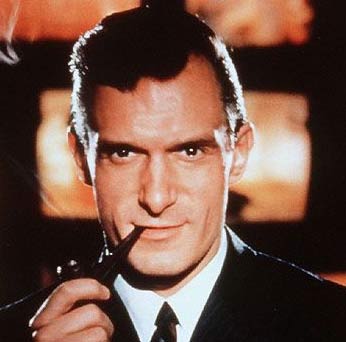
THE VERY SINGLE - AND SINGULAR - HUGH HEFNER

It is always astounding to me how a cultural icon’s most important works are overshadowed by fluff. Exhibit A: Hugh Hefner. Hefner, 85, has been a part of the American consciousness since the mid-20th century, when he quit his job at Esquire Magazine, scraped up a few hundred bucks from anybody who would help him, and quietly plotted the debut of “Stag Party,” a new world men’s magazine. Stag Party ran into licensing problems since there was already a magazine called “Stag,” and ended up being renamed “Playboy.” The very first issue featured a totally nude Marilyn Monroe (see cover below, left). The rest, as they say...

If you don’t dig too deep, all you find in Hefner is the above-mentioned fluff. Top heavy young girls, extravagant living, seemingly non-stop parties and lots of debauchery. That is why last week’s sudden exit of his would be 25-year-old bride made headlines worldwide. The China Economic Net proclaimed Hefner “dumped at the altar.” In the UK, the Independent declared, “Bad Luck, Hef – the Bunny’s Hopped it.” The New Zealand Herald ran a picture of the couple with the simple headline, “Cancelled.” Whatever Hefner does or does not do is big news in all corners of the earth, even a doomed marriage.

Who cares, right? Right. There is, however, so much more to care about when it comes to Hugh Hefner. What many people may not know is that Hefner has been what I would call a human rights and civil rights activist as long as he has been a publisher. His good works and good words have often been lost to his socially questionable lifestyle. That’s too bad, because those good works and words have changed the world.

Did you know (or remember) he used to have a TV show called “Playboy's Penthouse?” It ran for three years from 1959 – 1961. The camera would get a tight shot of elevator buttons lighting up one by one until it reached the penthouse apartment. Then the doors would open and viewers would see a party going on, people dancing, laughing, drinking, smoking. But here’s the rub: Some of the people were black, at a time when it was virtually unheard of for a TV show to feature anybody black, unless they were Amos and Andy. Bigger still was the fact that the show featured black performers, doing their thing with white performers. Unheard of. Sounds pretty tame now, but be aware that some of those black performers and party guests would probably not have even been allowed into buildings like the one portrayed in “Playboy Penthouse” in 1959. A white female folk singer performing with two black guys? Outrageous for its time.

Hefner’s “girlie” magazine and cool TV show (that could be considered the world’s first reality show) were really his vehicle to advance his agenda. The agenda had everything to do with freedom of speech and basic American liberty. Listen as he welcomes controversial comedian Lenny Bruce to “Playboy’s Penthouse.” Looks like fun, smooth and easy, but the conversation takes decidedly issues-oriented turns to censorship, racial integration and more:

This is one of only six network TV appearances Bruce ever made. American media was afraid of the Bruce’s often acerbic and envelope-pushing humor. So afraid was America of Bruce’s stretching the limits of the First Amendment that he was arrested multiple times, banned from many performance venues and even barred from certain U.S. cities. But Hefner, recognizing the underlying theme of freedom of expression, never wavered in his support of Bruce’s career. You don’t necessarily have to approve of Bruce’s material, nor of Hefner’s, for that matter, but the indisputable fact is that Hefner advanced the cause of freedom in America.

In 1973, when the movie Carnal Knowledge was deemed obscene by several state Supreme Courts, Hefner was interviewed in his own magazine on the 20th anniversary of Playboy. His fervent dedication to free speech was never more clearly evident: “What it amounts to is that the Nixon Court, which is supposed to be loaded with what he calls “strict constructionists” of the Constitution, has ruled that the First Amendment’s absolute protection of free speech and press doesn’t really mean what it says, that certain kinds of speech and writing aren’t necessarily free at all—speech and writing that has to do with sex. The Court has decreed that the ruling elite of every local community has the power to determine what everyone else in town may read or see.”

Anyone who doubts Hefner’s dedication to the absolute nature of freedom of expression should read “The Playboy Philosophy,” a 25-part Hefner-penned series that appeared in the magazine from 1962 – 1966. In it, Hefner clearly explained his beliefs about social and moral issues, right on the cusp of the American sexual revolution that took off in the late 1960s. Having just returned from London where he opened a Playboy Club, Hefner had witnessed the European sexual revolution firsthand, and saw it as much as an issue of human freedom as he did a sexual/cultural shift. The philosophy extended itself to issues like freedom of (and from) religion, as well as the critical importance of the separation of church and state.

In the 1960s Hefner befriended Jesse Jackson (below, left) and Dr. Martin Luther King. In fact, MLK was interviewed for the magazine by none other than Alex Haley (who later wrote “Roots”), who happened to be the writer who did the first interview the magazine ever featured. Hefner was passionate about civil rights and racial equality and integration. It has been a theme of his life, throughout his life. That’s where the fluff can really get in the way of the substance. The substance of Hugh Hefner is all about fairness, freedom and individual rights. It may be couched in lush photos of bare breasts and salacious cartoons, but if you really take time to study the history of his publication, it’s about you and me and what we deserve in a country that was built on a foundation of personal liberty. One could say that Hefner also advanced a culture that was steeped in puritanical repression to the next level of honest sexual expression. What’s not to like about that?

And so that brings us full circle back to one Crystal Harris, the 25-year-old would-be bride whose cold feet sparked headlines from sea to shining sea. Here’s the truth: Crystal Harris doesn’t matter. She may matter to her mom and dad or somebody, but she does not matter in the larger scheme of things. What matters about Hefner is his undying, lifelong commitment to your human and civil rights. He has long been someone I admired, if only for his unwavering efforts to open minds and hearts. I mean you have to love a guy whose left brain says, “Playboy was founded on the notion that nice girls like sex too,” while the other side says, “I urge one and all to live this life as if there is no reward in the afterlife, and do it in a moral way that makes it better for you and for those around you and leaves this world a little better place than when you found it."

Wednesday, May 11, 2011

THE JOURNEY OF RECONCILIATION

This month marks the 50th anniversary of the Freedom Riders, a group of young men and women who bravely boarded interstate busses en route to Southern states, in an effort to challenge racial discrimination laws. The activists would be seated interracially on public transportation, and blacks would even sit up front, which was strictly outlawed at the time. Predictably, the Freedom Riders met with mob violence in various Southern cities, with the most vicious attack culminating in a bus being set on fire and the door blocked so riders could not disembark. Somehow they did manage to exit the bus, only to be brutally beaten. Efforts to lynch some of the riders failed, but mob violence would follow the group city to city. Whites who tried to help the battered blacks were roundly ostracized by their communities. I could describe the subsequent bloody beatings with iron pipes and wooden planks, the inhumane treatment of those who ended up in the Mississippi State penitentiary and the law enforcement officers who stood by and allowed the riders to be battered into unconsciousness. But it’s all in the history books and archives of the civil rights movement.

Instead, it seems appropriate to mention something that happened many years before the 1961 Freedom Rides. It was called the Journey of Reconciliation, a bus trip by 16 men, (above, right) blacks and whites, out to accomplish what their 1960s counterparts would replicate. It was led by Bayard Rustin,(left) a 37-year-old black man with a long history of battling against the widespread racial discrimination of the early to mid-20th century. Today, the late Rustin is not a household name like other civil rights activists, but it was he who really stood up to the white establishment and fought racial inequality. Later in his life, he tried to do much the same thing for the civil rights of gay Americans. Rustin was a man who truly walked the walk.

Here is what Rustin and his Journey of Reconciliation companions (eight blacks and eight whites) were up against in 1947. The U.S. Supreme Court had ruled that racial discrimination in interstate travel defied the U.S. Constitution. Rustin and company were out to see how that was playing in the deeply racist Southern states. Much like Dr. Martin Luther King, with whom Rustin (right, pictured with Dr. King) would later ally himself, the 16 men planned on non-violent, civil disobedience. As we later saw in the 1960s urban riots, non-violence is tough to maintain, but Rustin and his cohorts did it. But here is what happened: Along the way, five blacks and five whites were arrested at various times. Rustin himself ended up on a chain gang in North Carolina, where the treatment was reportedly so brutal and inhumane that the chain gang system was ultimately outlawed.

It has been widely reported that after Rustin was arrested in North Carolina, the presiding judge said this to the white members of the Journey: "It's about time you Jews from New York learned that you can't come down here bringing your niggers with you to upset the customs of the South. Just to teach you a lesson, I gave your black boys thirty days on the chain gang and I give you ninety."

Such was life in the deep South (even in the judicial system) in the 1940s. Remember, this was way before Rosa Parks (below, left) took her seat at the front of the bus. It was also long before the landmark ruling Brown vs. Board of Education, in which the U.S. Supreme Court said segregating schools was unconstitutional. It wasn’t until 1967 that blacks and whites could even legally marry in this country, and that too had to be dictated by the Supreme Court. It was, to understate it…a different time in America.

By 1961, when the Freedom Riders boarded busses to push the segregation envelope to its extreme, the U.S. was still deeply rooted in its post-slavery mentality. Blacks were begrudgingly tolerated as long as they shut their mouths and didn’t cross any societally-dictated lines. But often forgotten is the 1947 Journey of Reconciliation. Rustin and his group were pioneers. The Freedom Riders were soldiers in the seemingly never-ending war on racism.

Having lived through those tumultuous 1960s, when the Civil Rights movement reached its bloody zenith, I still say that racism today is far more pervasive and divisive than it was then. Back then, society was unfortunately organized around racism. Today it is not. Today racism is more deceptive. You see it in the offices you work in, when equally qualified individuals are up for the same job, but the white male establishment chooses one of its own for the promotion. You see it in school, where the black kids all sit together in the classroom across from the white kids. You see it on television, where it is rare for a lead role in a fictional drama to be played by a black actor. You see it in the movies, where romantic stories are generally built around white characters.

So, nobody’s using separate drinking fountains anymore, or banning entire population segments from lunch counters, or giving whites preferential treatment on public transportation. Instead, racism rears its aged head in more institutional ways. How many fingers do you have left when you try to count the number of black CEOs of Fortune 500 companies? What’s the percentage of black elected officials in the 112th U.S. Congress? I’ll help you on that one – it’s 9.66%, far below the percentage of black Americans, according to the U.S. government’s own stats. How many blacks make it in to med school in America? According to the American Association of Medical Colleges, in 2010 there were almost 50,000 active white enrollees in the nation’s medical schools, vs. just over 5,500 blacks.

Unfortunately, activism is not the main event in America anymore. Where are the Bayard Rustins of the world now? Twenty-five years from now will Congress, corporate America, television, movies and med schools still be lily white? I’m an optimist, but I’m also a realist. Twenty-five years ago was 1986 – do you sense a major shift in the arduous climb toward racial equality since 1986? Neither do I. But still, I can’t help thanking Bayard Rustin and his associates, and the many courageous Freedom Riders of 1961 for all that they did. I’m waiting for that same new day in America that I was waiting for back in the 1960s, but no matter what happens next, what happened back then was nothing short of exceptional.

Monday, January 19, 2009

INAUGURATION DAY 2009

THE INTERSECTION OF ART & HOPE

It will be a truly distinctive moment in American history - the inauguration of the first black President of the United States, celebrated one day after the commemoration of the 80th birthday of Dr. Martin Luther King. Barack Obama clearly feels a real connection with Abraham Lincoln, but I believe the timing of his inauguration and the obvious parallels in their influence on America will always somehow associate Obama with King. Each of these men has demonstrated the rare gift of being able to cause togetherness and meaningful commitment among the American people. It is akin to what we felt in the months after 9/11, but then there was no strong leader to inspire a sense of long-lasting intimacy among us. Now there is.

The coming together of the American people after so many years of deep fragmentation is a wonder in America right now. Sometimes, the most significant moments in our history cause art to emerge, as well. Witness the Works Progress Administration (WPA) artistry during the Great Depression (example at right). On numerous occasions historians have highlighted the relationship between social change or upheaval with the emergence of distinctive art forms. With that in mind, if you have not heard the name Shepard Fairey yet, you surely will. Fairey is the artist who created the now iconic HOPE posters so pervasive during the Obama campaign (left). Fairey also created the header art you see at the top of this piece.

I am not an art critic. But I am a great audience. And what I see, from out here is a real commonality between much of the WPA art and works by street artists like Fairey. They are both what you could call populist art. In both we see the real daily dreams and struggles of American men and women. On some level, no matter what your politics are, you have to step back and appreciate America's heart and soul starting to show itself again. We were neutralized for eight years. A little spirit couldn't hurt us about now.

It is that spirit that moved music producer David Foster to team with musician Will.i.am to write America's Song just days before the inauguration. It was reportedly easy to engage the participation of Faith Hill, Mary J. Blige, Bono and Seal to perform the song, first on the January 19 episode of our holy St. Oprah of Chicago's show. Like much of the WPA art and Fairey's works, America's Song is clean, straightforward and elegant.

Now, pump up the volume, go full screen and enjoy this shiny, new artistic collaboration: